




Cultivating solutions, yielding success Growers celebrate Washington small grains industry at 2025 convention


By Trista Crossley
Editor

2025-convention-1

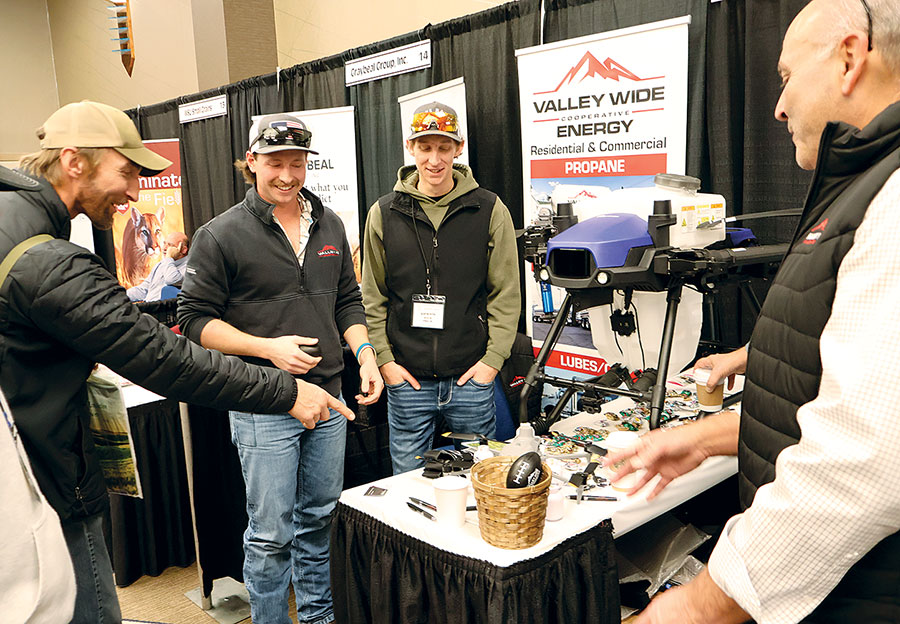
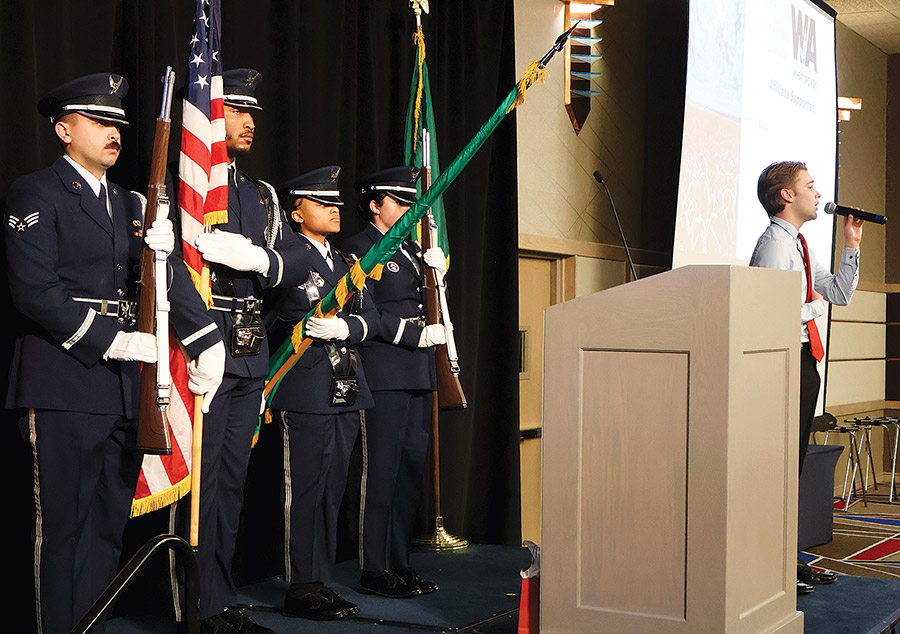
Last month, Washington wheat growers gathered at the Coeur d’Alene Resort in Coeur d’Alene, Idaho, to celebrate the state’s small grain industry and the people that make it grow. 
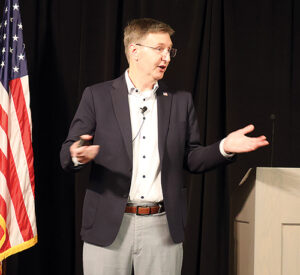
Ray Starling was back at the convention three years after his first appearance to ask, “Is the food system still broken?” If you ask the internet, yes, but Starling doesn’t agree. Data shows that farmers are using about the same amount of inputs as they did in the 1940s, but they are producing nearly three times as much today. For one hour of productivity, in 2010, they are making 1,600 times the output they were in 1947. Since 1964, the amount of money people have spent on food has consistently gone down. “No other industry comes close to this sort of gains and efficiency,” Starling said. “Does this food system feel like it isn’t working?” He told the crowd that they’ve got to figure out how to navigate in a new era where trust in institutions is falling, geopolitical tensions are rising, and the value of trade is being questioned. He suggested keeping the farmer out front, more cooperation and collaboration between ag sectors, and using data to prove agriculture is doing a good job.

“We had a great turnout this year,” said Michelle Hennings, executive director of the Washington Association of Wheat Growers (WAWG). “We were able to take care of some WAWG business and prepare leaders and staff for the year ahead by updating our resolutions. We also held a strategic planning session focused on state and national legislative priorities that was very successful and valuable.”
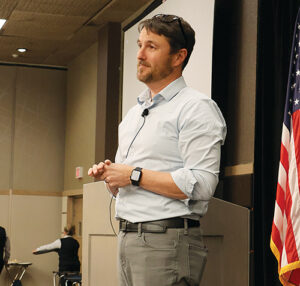
Washington’s favorite convention meteorologist, Eric Snodgrass, is predicting a snowier-than-average start to winter, thanks to La Niña. Some models are predicting a La Niña collapse by the end of December, and if that happens, colder, dryer conditions could set in. The Pacific Northwest needs seven sizeable winter storms between now and April to “load” the mountains. “Good winters are not necessarily enjoyable winters,” Snodgrass said. Meteorologists are projecting two to three feet of snow in the headwaters of the Columbia River, which is good news for the Columbia Basin water supply. “If Whistler is having a great year, so are you,” he said. For more agricultural weather insights from Snodgrass, visit ag-wx.com

The convention was held Nov. 17-19 and included keynote presentations from legislative guru Ray Starling, ag humorist Jolene Brown, economist Arlan Suderman, and meteorologist Eric Snodgrass. Anthony Peña, policy manager for the National Association of Wheat Growers (NAWG) led a breakout session focused on the farm bill, NAWG priorities, and other updates from Washington, D.C. See page 16 for the NAWG update. Other breakout sessions covered the global wheat trade, marketing, Natural Resources Conservation Service updates, a wheat market outlook, an update on the Northwest Herbicide Resistance Initiative, taxes, and marketing wheat products directly to consumers. See page 26 for a brief recap of some of the breakout sessions.
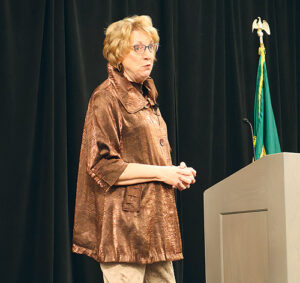
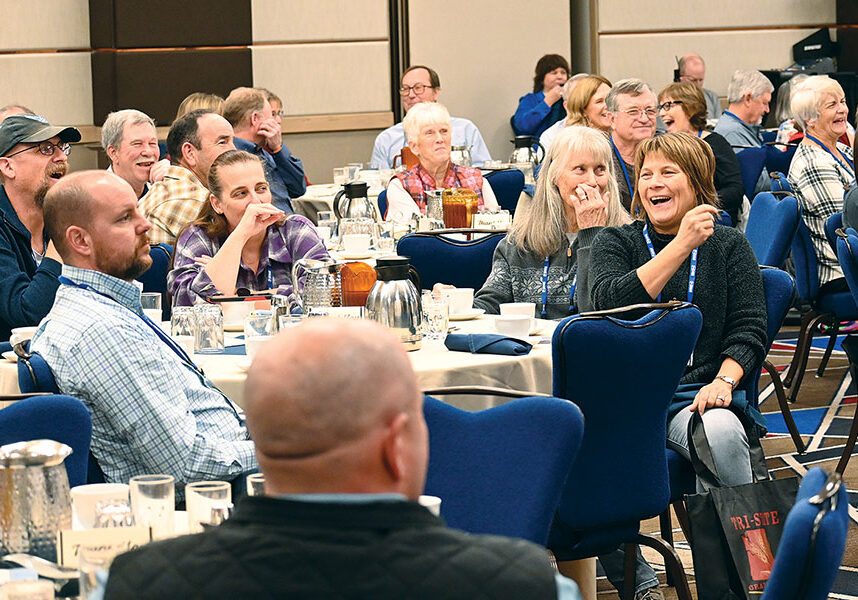
Jolene Brown kept the audience in stitches while imparting some words of wisdom. In between reading excerpts from her book, “Holy Crap I Married a Farmer,” she told the crowd that farmers are great at production but bad at communication, asked them if they knew how to neighbor, and listed three things that will kill a family business: silence, presuming a conversation is a contract, and operating the farm as a family, not a business. “You need to make realistic business plans that will allow the business to continue,” she said, adding that if it isn’t written down, it doesn’t exist. A family’s legacy can continue even if the farm isn’t being operated by a family member, and she encouraged growers to think of “ROI” as a return on integrity rather than a return on investment. She wrapped up her presentation with three suggestions to bring joy and laughter: accept the things you can’t control or change; find the humor and write those funny things down; and associate with folks who enjoy their journey.

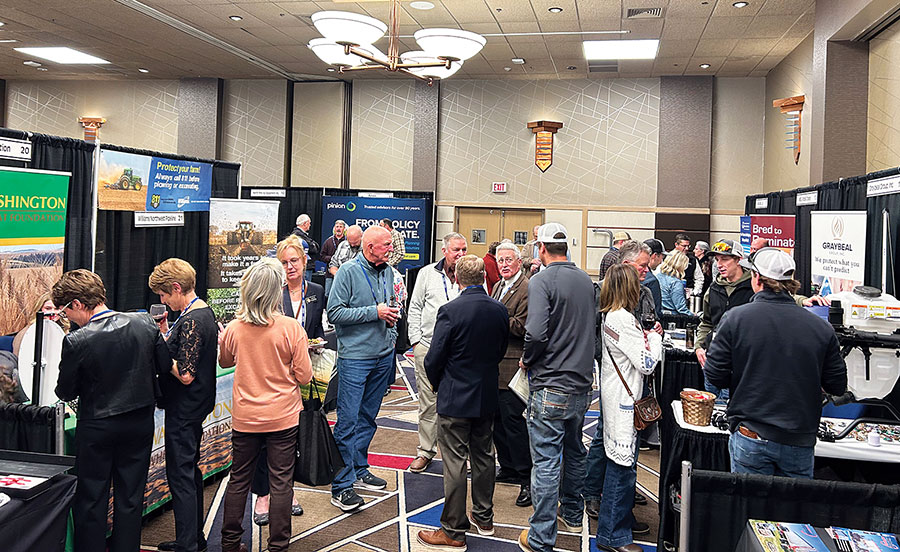
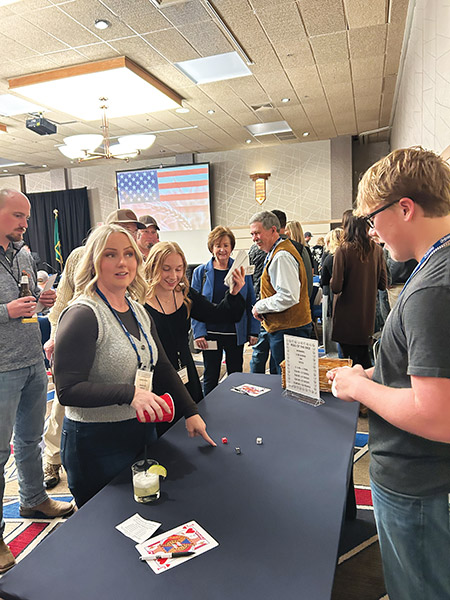
The Washington Wheat Foundation’s dinner and silent auction was moved to the convention’s second night so exhibitors could more easily participate. Items donated by growers, county organizations, and industry supporters were auctioned off to raise money for the foundation to use for scholarships and for grants that help support small grains research. Throughout the convention, drawings were held for a free registration to the 2026 convention, gift cards, and other items. A photo submitted by Sandy Jamison won the photo contest, and she received an Amazon gift certificate. The final night’s dinner featured a Casino Fun Night, where growers used funny money to play games for raffle tickets.
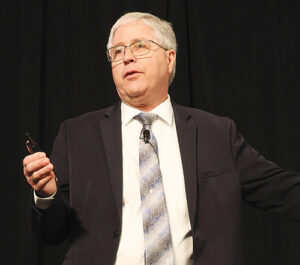
Economist Arlan Suderman touched on a number of topics impacting the wheat markets, including unemployment (looking pretty good right now); inflation (may be trending higher in the short term); uncertainty created by the Trump administration (“Trump loves uncertainty. It keeps his opponents guessing, both politically and in trade negotiations.”); national debit (sitting at $38 trillion); and tariffs. But looming over everything is China. Suderman said relations with China have de-escalated, but they will likely continue to try to restrict U.S. access to rare earth minerals. They’ve made big commitments to buy U.S. commodities but have a poor track record of keeping promises, and the Supreme Court’s decision on Trump’s tariffs could change the picture where China is concerned.

While all the lights and Christmas decorations filled the convention with the holiday spirit, some important business was conducted. Growers attended an all-committee meeting where they heard updates from U.S. Department of Agriculture agency leaders, as well as federal and state legislative updates from WAWG’s lobbyists. WAWG members reviewed and updated the association’s resolutions and approved a familiar face to the leadership team: Ryan Poe from Grant County. This will be Poe’s second trip through the leadership chairs; he previously served from 2018-21.

“We are very grateful to Ryan for agreeing to step up and serve his fellow growers for another term,” Hennings said. “He brings a wealth of knowledge and experience to the leadership team as we fight for a farm bill, seek solutions to rising input costs, and deal with overwhelming regulatory burdens.”

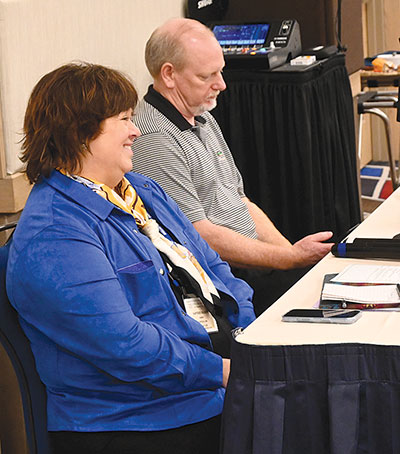
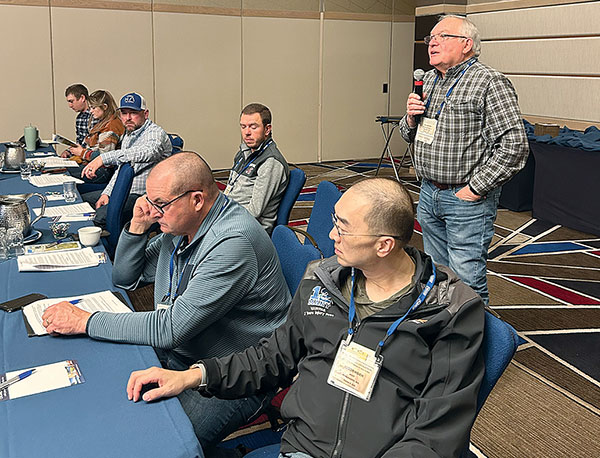
Updated WAWG resolutions can be found on page 14. See more convention photos on page 24-25. 

“We’d like to thank our sponsors, industry supporters, and exhibitors who helped make this convention successful. I’d also like to recognize all the time and hard work by the WAWG staff that made this year’s event run smoothly,” Hennings said.

Next year, Oregon wheat growers will be joining Washington growers at the 2026 convention, which will take place Nov. 30-Dec. 2 in the Tri-Cities.
Tags

Why do I farm?
By Gil Cosby
President, Washington Association of Wheat Growers
What the One Big Beautiful Bill means for ag
By Ryan Janke
CPA, Leffel, Otis & Warwick, P.S.
Looking back
By Jeff Malone
President, Washington Association of Wheat Growers