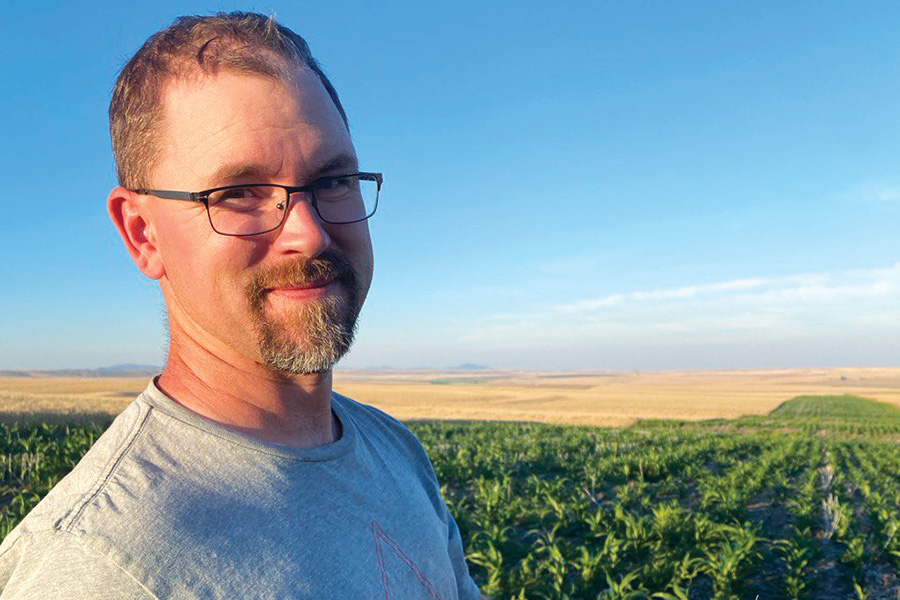
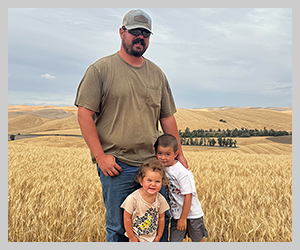
The devil’s often found in the details, and one Lincoln County grower is shifting through a wheat field of data to find answers. Jesse Brunner, a fifth-generation farmer north of Almira, Wash., is going into his third year participating in the Great Lakes Yield Enhancement Network (YEN). The program, which…
When William Jasper Spillman began applying Mendel’s Laws of genetics and inheritance to wheat improvement in the 1890s, he set in motion a tradition of agricultural research that has defined Pacific Northwest farming ever since. By 1958, the industry’s needs — for new varieties, tools, practices, and education — had…
An unusually warm, wet winter appears to be increasing the pest and disease pressure Eastern Washington growers are facing going into spring, and at the top of the list is stripe rust. According to the last update from the U.S. Department of Agriculture’s Agricultural Research Service research plant pathologist, Dr….
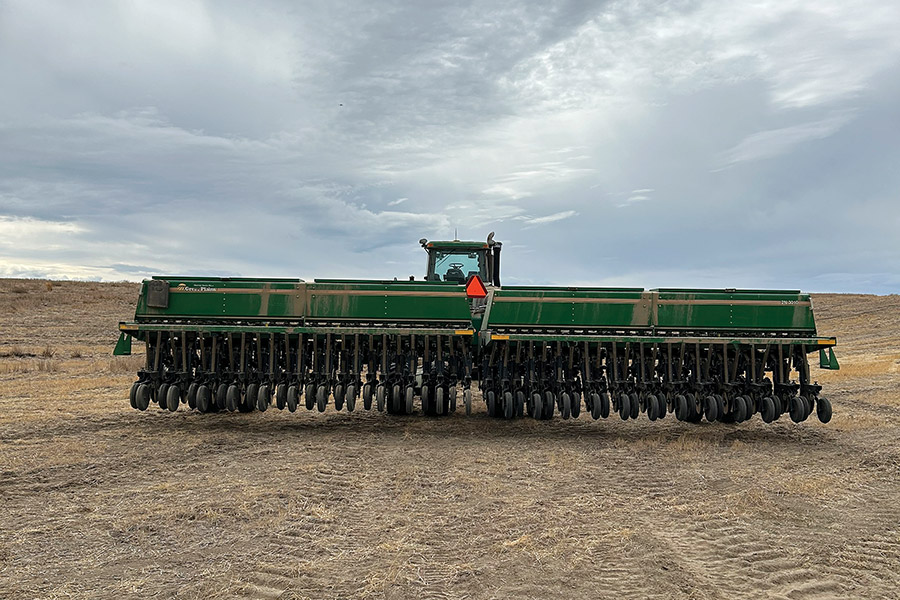
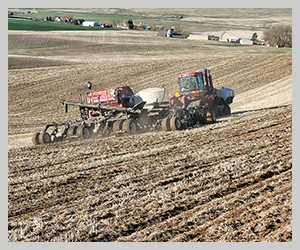
In early October, Grassl Farms in Franklin County was a hive of activity as more than 100 growers gathered to learn about low-till and direct seeding methods and see several drills in action. The low-till drill demonstration was organized by Kara Kaelber, district manager of the Franklin Conservation District (FCD);…
The Washington State Department of Agriculture wants to help farmers evaluate their conservation efforts and provide access to resources and technical implementation assistance through a free, voluntary, web-based program, Saving Tomorrow’s Agriculture Resources (STAR). In the online STAR tool — startool.ag — growers answer simple, production-specific questions about their rotations,…
Technology has moved plant breeding forward by leaps and bounds, but not without some resistance, most notably to genetically modified organisms (GMO)s. Gene editing could provide a viable alternative in breeding programs without all the GMO baggage. In gene editing, researchers modify the current DNA of a plant to either…
In the first Agricultural Marketing and Management session of 2025, some of the top researchers in the region explored the weeds and weed management practices Eastern Washington wheat growers are working with. Drew Lyon, a professor and holder of the Endowed Chair Small Grains Extension and Research, Weed Science at…
“When should I sell my wheat?” This question is something every wheat grower has to work through each crop year, but there is an implied condition that is not stated. “When should I sell my wheat and get a good price!” No one wants to sell their wheat at a…
Darla Tyler-McSherry turned one of the worst moments of her family’s life into a life-saving mission to prevent other farm families from experiencing the same thing hers did. By 2016, Dick Tyler, Tyler-McSherry’s 82-year-old father, had worked on the family’s Montana wheat farm his entire life and was very proud…
For farmers in a pickle about pesticide labels, there’s online help available through Washington State University’s (WSU) Pesticide Information Center OnLine (PICOL). While PICOL has been around for more than 40 years, it has just recently been rebuilt and upgraded and is the only database in the country that can…