




Wheat industry leader is still a Pennsylvania farm kid at heart Sam Kieffer, CEO National Association of Wheat Growers
2026March 2026
By Trista Crossley
Editor
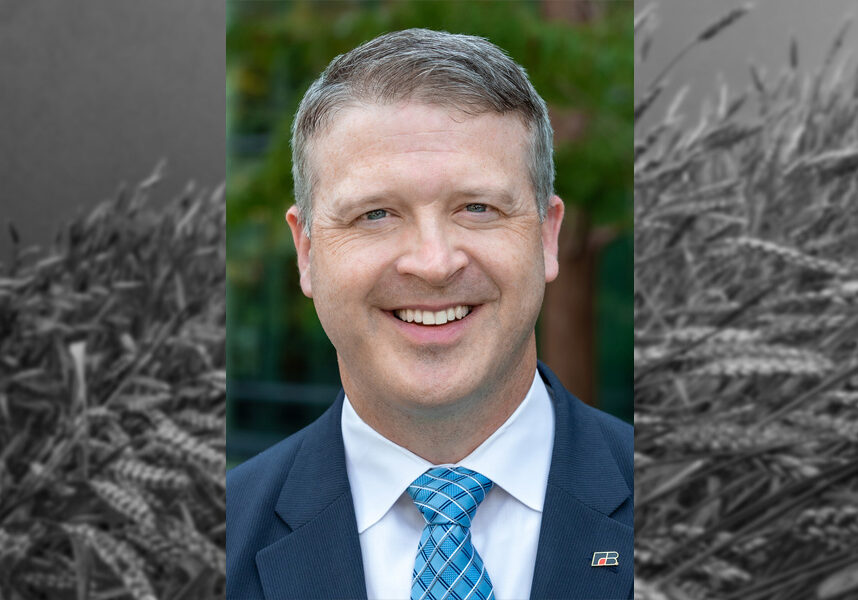
Three months into his role as CEO of the National Association of Wheat Growers, Sam Kieffer finds it “exhilarating” to focus all his advocacy efforts on a single commodity.
“It’s interesting and exciting to be able to dig deeper into wheat-specific challenges and provide more thorough explanations for a single commodity than I was doing before,” he explained. Before coming to NAWG, Kieffer was vice president of public policy at the American Farm Bureau Federation. “It’s also a little scary, but in a good way. At Farm Bureau, every day, there was a news cycle that had something with agriculture, and there were always challenges that needed to be worked on. Sometimes, they were very divergent. In this position, I get to focus on one commodity and dig deeper than I ever have before.”
Kieffer grew up on a family farm in Pennsylvania that grows corn, soybeans, and wheat; the farm is currently operated by his brother. Before working for the American Farm Bureau Federation, Kieffer held leadership roles at the Pennsylvania Farm Bureau and is a former U.S. Army and Pennsylvania Army National Guard officer. Kieffer holds degrees from Dickinson College, Widener University, and Delaware Valley University.
The move from Farm Bureau to NAWG has given Kieffer the opportunity to focus on the finite details of a commodity rather than take a 30,000 foot view of a general farm organization, but politically, he said it hasn’t changed his approach.
“Farmers are well respected by rank-and-file consumers as well as elected officials, and most wheat growers are also growing other commodities as well,” he said. “Across the board, most of the issues in agriculture and challenges that are trying to be solved cut across several different commodities, so I’m still working with many other farm groups and other commodity groups, as well as general farm organizations.”
Kieffer described NAWG’s role as keeping a finger on the pulse in Washington, D.C., and making sure that the grower’s voice is presented and considered when officials are making decisions that might impact food, farming, small businesses, and rural communities.
“There’s a lot of conversations that impact farmers, and farmers don’t have enough time to do it,” he said. “We are humbled to help and be the watchdog, if you will, while farmers are doing the great work back home.”
In order to make that impact, one of Kieffer’s short-term goals is to fill out the NAWG team. He will also be looking for ways to increase wheat growers’ reach through partnerships and contracting. Growing membership within NAWG is another top goal.
“Not all wheat-growing states are represented by NAWG,” he said. “And those states represent very important congressional officials. Every state provides additional access and opportunity to help make sure that the grower voice is heard in Congress, so engaging beyond our membership will certainly help amplify our message and access to elected officials in Washington.”
Kieffer said most of NAWG’s conversations with elected officials right now revolve around the farm economy and the challenges growers are facing, such as ag profitability, fertilizer prices, and the impact inflation has on inputs, particularly the cost of credit and capital.
“There are many other things that government can do, like passing a long-term farm bill rather than kicking the can down the road, that would provide certainty to growers when it comes to accessing credit and knowing what their business climate is going to look like for more than nine months or 12 months down the road. So, the farm economy is one of the biggest conversations we’re having,” he said.
Trade is another major topic of conversation, especially because half of every bushel grown by U.S. farmers is exported. The administration is gearing up to review the U.S.-Mexico-Canada Agreement this year, and NAWG is ready to continue supporting U.S. Wheat Associates, the U.S. Department of Agriculture and the Office of the U.S. Trade Representative in their efforts to find new markets and solidify current ones. Making sure elected officials understand the value of federal investment in ag research is also on NAWG’s watch list. Kieffer pointed out that the U.S. is being outspent two to one by China when it comes to public investment in ag research, and that lawmakers have an opportunity to narrow that gap in the next farm bill.
“We’re also holding a lot of conversations about food and nutrition and making sure that elected officials understand the wheat grower’s role and the care that wheat growers take growing the crop that ultimately ends up as a loaf of bread or another edible product. We also want to make sure that rules, like dietary guidelines, don’t negatively impact domestic demand down the road and make sure that everybody understands the nutritional value of wheat and wheat-based foods.”
Michelle Hennings, the executive director of the Washington Association of Wheat Growers, was involved in the CEO hiring process. She said she was impressed by Kieffer’s deep understanding of ag policy.
“Sam is a good fit for NAWG, and we look forward to working with him to amplify wheat growers’ priorities in Washington, D.C.,” she said. “I’m confident he will continue leading NAWG forward, building coalitions and connections that will help shore up the agricultural industry.”
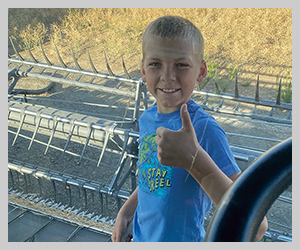
While Kieffer’s contribution to his family’s farm may be limited by his day job (he helps out on weekends and when he can), he still sees himself as a farm kid at heart.
“I wake up every morning to make sure that our growers can do what they do well. Sometimes that involves us being able to tell their story. Sometimes that involves us asking the growers to help weigh in because their voice is certainly more valuable than ours. Growers have been and will always be our best advocates,” he said.