



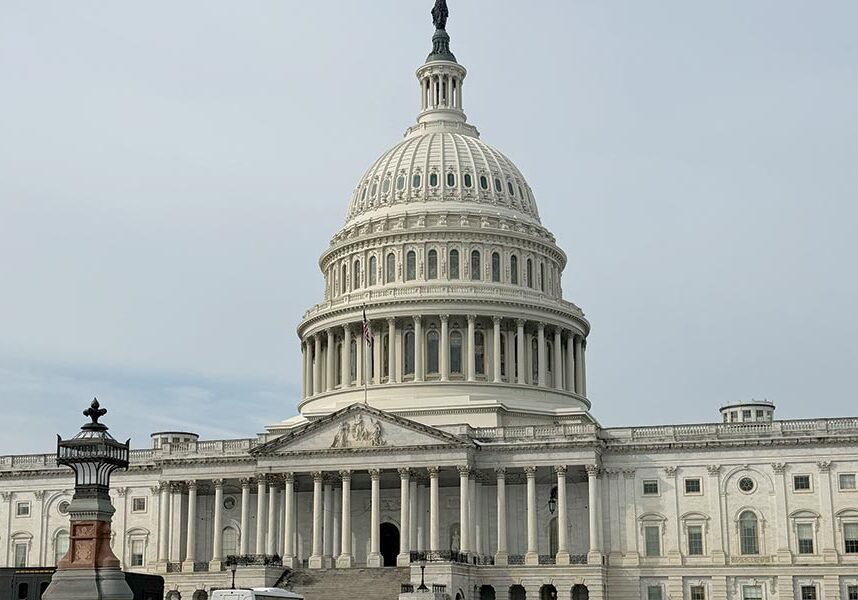
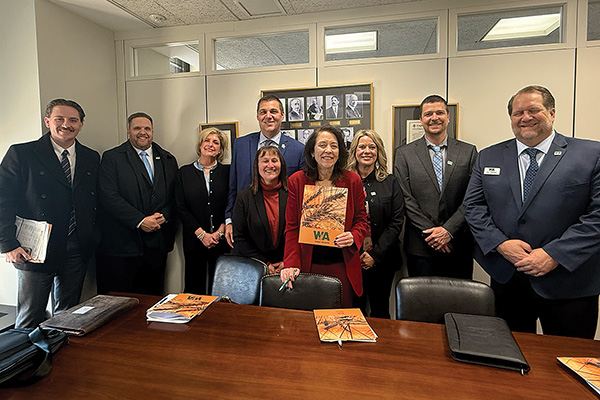
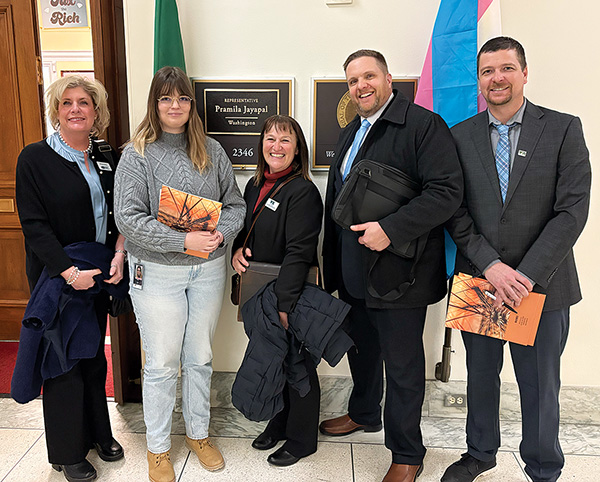
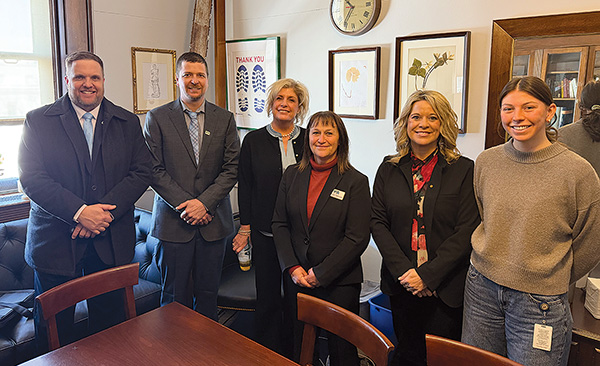
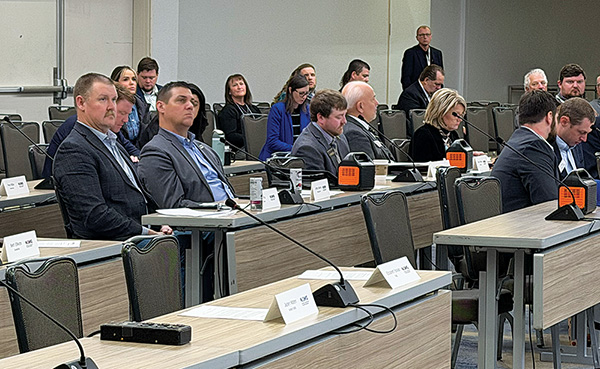
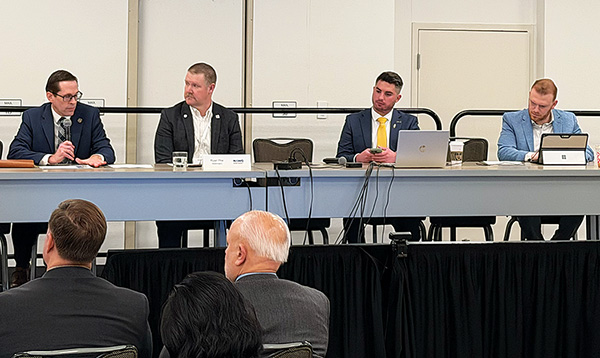
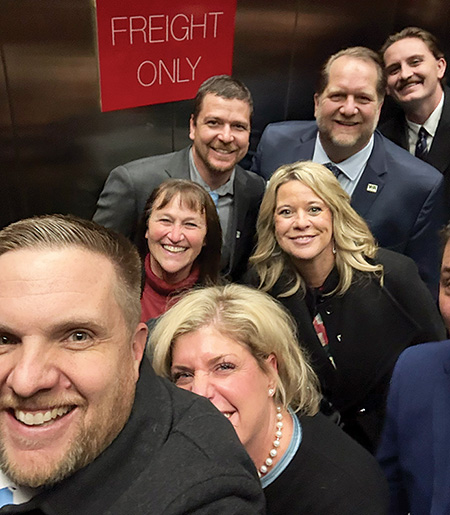
Despite a major late January snowstorm that disrupted travel through much of the country, leaders and staff of the Washington Association of Wheat Growers (WAWG) trekked to Washington, D.C., to take part in national wheat organization meetings and spend time on the Hill, meeting with congressional offices and administration officials.
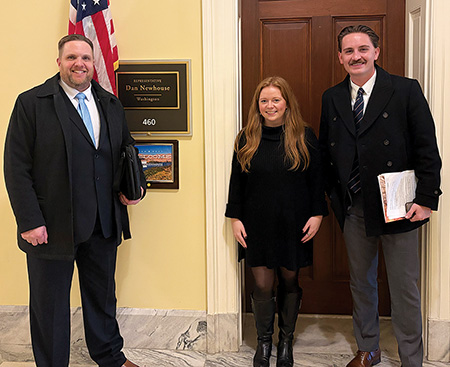
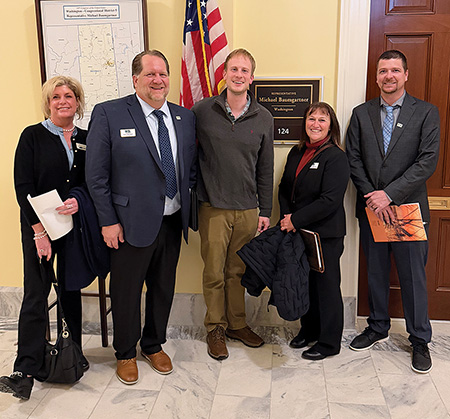
“The trip was very productive, and we were able to meet with many offices of our state’s congressional delegation,” said Michelle Hennings, WAWG executive director. “We emphasized the problem of ag viability in Washington state and the fact that our state is ranked 50th in take-home pay for growers based on USDA (U.S. Department of Agriculture) date.”
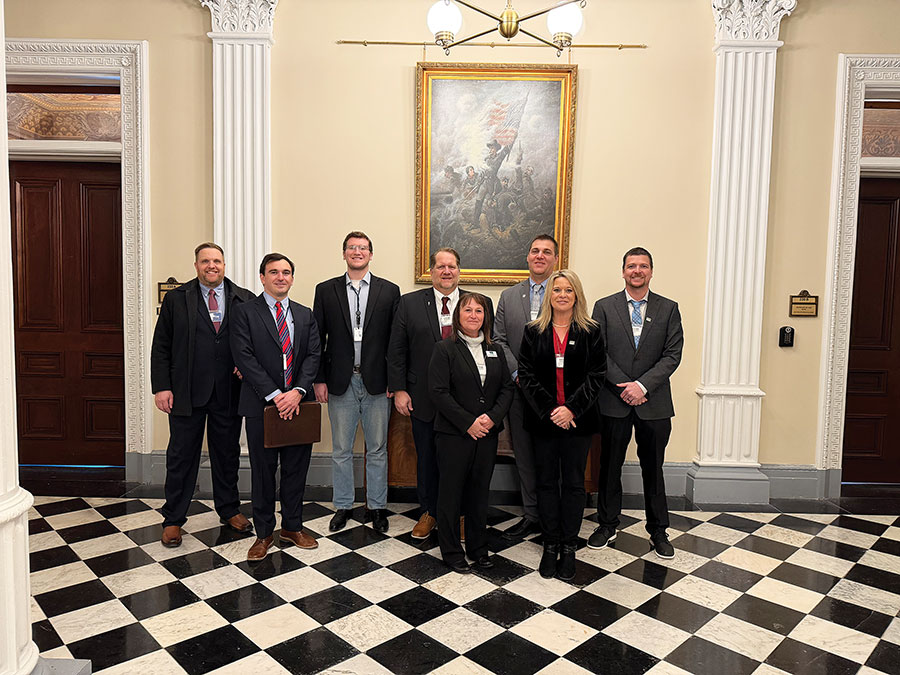
Growers also discussed wheat price vs. input costs, the change in the food pyramid that puts grains at the bottom, and the importance of moving forward with a Farm Bill 2.0 that includes reauthorization of conservation programs, expanding and modernizing the farm credit title, and codifying the transfer of the Food for Peace program to USDA.
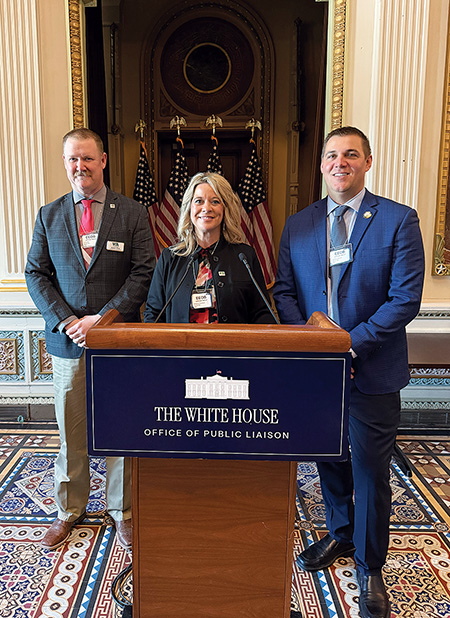
Ag viability in the state was also very much on the minds of the Washington group during the first of two visits with White House officials: Jason Becker from the Office of Public Liaison and William Kelleher, domestic policy advisor. Hennings said the administration representatives were eager to learn about the factors contributing to farmers’ challenges and discuss potential solutions on how to bring input costs down. They also talked about the lower Snake River dams and the Conservation Reserve Program.

The second White House visit was arranged by the National Association of Wheat Growers (NAWG) to allow wheat growers from across the country to engage directly with administration officials at the White House, including senior officials from the Office of the U.S. Trade Representative, Domestic Policy Council, National Security Council, U.S. Department of Agriculture, and the Environmental Protection Agency.
“It was very informative for growers to have access to senior administration officials and hear those officials recognize the issues wheat farmers across the country are facing,” Hennings said.
Another topic growers discussed with lawmakers was the need for science-based policies when it comes to pesticides. Gil Crosby, WAWG president and a grower from Spokane County, has been working closely with the Modern Ag Alliance to stress the need for the Agricultural Labeling Uniformity Act, which would provide clarity and consistency on pesticide labels and reinforces the EPA’s role as the national authority on pesticide labeling and packaging requirements.
“Pesticides are a critical part of farmers’ toolboxes and restricting access to them could do serious damage to our food supply system,” Crosby said. “We were able to impress upon legislators and Make America Healthy Again advocates the importance of grains in consumers’ diets and making decisions based on sound science and research.”
Besides the opportunity to meet with legislators, the annual national winter conference brings together wheat growers from across the country to take part in NAWG committee meetings where they discuss trade, transportation, budgeting, and planning for the future. WAWG Past President Jeff Malone sits on NAWG’s Environment and Research Committee, while WAWG Secretary/Treasurer Ryan Poe sits on the Domestic Trade and Policy Committee.
Prior to the D.C. trip, the WAWG board approved the organization’s 2026 national priorities at the January board meeting. Those national priorities focus on preserving food security; protecting markets; nutrition guidelines; promoting and protecting infrastructure; protecting food systems with safe and innovative pesticides; and supporting innovation, research, and sustainable food systems:
• WAWG strongly supports modernizing future farm bills and continuing to offer agriculture and nutrition support programs.
• WAWG supports a do no harm approach, which includes maintaining the current structure of the crop insurance program and current cost-share levels. Crop insurance is a critical risk management tool for farmers. Farmers pay their portion of the crop insurance premium, and without cost-share support, coverage would be cost-prohibitive, and the system would not function effectively. Without the safety net, it causes uncertainty for the future of agriculture and for the safe, reliable and abundant food supply the American public currently experiences.
• WAWG supports the reauthorization of the farm bill and to make necessary adjustments to Price Loss Coverage (PLC) and Agriculture Risk Coverage (ARC) so they can function effectively.
• WAWG supports prioritizing working lands conservation programs in the conservation title. Voluntary programs like CSP, EQIP, and CRP have functioned well and provided an important incentive to producers to undertake practices that are good for the environment and good for their operations.
• WAWG supports efforts to strengthen competition in agriculture input markets and reduce the cost of production. WAWG supports policies and actions that promote competitive pricing, supply chain resilience, and fair access and pricing for fertilizer, seed, fuel, pesticides, equipment, and other essential inputs necessary for wheat production.
• Funding through the Agricultural Trade Program (ATP) has been a boost to USDA cooperators, such as U.S. Wheat Associates, to help them operate at the needed capacity to maintain robust market presence for U.S. wheat farmers in the face of well-funded global competitors. WAWG supports continued and increased strong federal funding through the Market Access Program (MAP) and the Foreign Market Development (FMD) program to maintain the progress achieved with the ATP funds.
• WAWG recognizes the importance of food aid to meet humanitarian needs across the globe. WAWG supports purchasing U.S. wheat for U.S. food aid programs, rather than purchasing wheat from competitors.
• WAWG supports full implementation and enforcement of existing trade agreements to allow fair trade to occur within the export marketplace.
• WAWG strongly supports the enforcement of Sanitary and Phytosanitary agreements with its trade partners.
• WAWG supports science-based dietary guidance that upholds the nutritional value of whole, refined, and enriched grain foods as part of a balanced diet and opposes policy frameworks or public messaging that mischaracterize them as unhealthy or “ultra-processed.”
• WAWG supports keeping the lower Snake River dams intact as they are vital to Washington and the nation’s economy and transportation infrastructure. WAWG also supports funding for maintaining the Columbia River System. Removal of the four lower Snake River dams would significantly increase carbon emissions that contribute to climate change and jeopardize health, safety and livelihoods in already economically fragile local and regional economies. WAWG supports the findings in the 2020 Federal EIS and opposes any state, legislative, or administrative effort to remove or disrupt the Snake River dam system.
• WAWG supports funding to maintain and improve Washington road, river, and rail systems.
• WAWG supports continued action regarding the Columbia River Treaty, which protects viability of U.S. navigation, hydropower, irrigation, and flood control.
• WAWG opposes cancelling crop protection product labels or uses unless equivalent replacement products are available. We support science-based research in these products.
• WAWG supports the professional use of pesticides and best management practices for their use.
• WAWG opposes legislation that would restrict or limit the use of pesticides through bans or by setting residue tolerance levels that are not based on science.
• WAWG supports incremental funding increases for USDA that cover mandatory pay costs and the rising costs at ARS research facilities, reducing funding for research and the ability to address stakeholder needs, unless covered in the salary and expenses budget.