



In mid-July, legislators got down in the dirt to hear directly from producers about how bills passed in Olympia are affecting the state’s agricultural industry.
Every year, ag stakeholders bring legislators and staff to visit the people and companies that raise and process the products grown in the state. This year’s food and farm tour was held in Benton and Franklin counties and included stops at a wheat farm, a potato farm, an irrigated farm, Second Harvest, and a potato processor. The tour was sponsored by the Washington Association of Wheat Growers (WAWG), the Washington State Potato Commission, Second Harvest, and the South Columbia Basin Irrigation District.
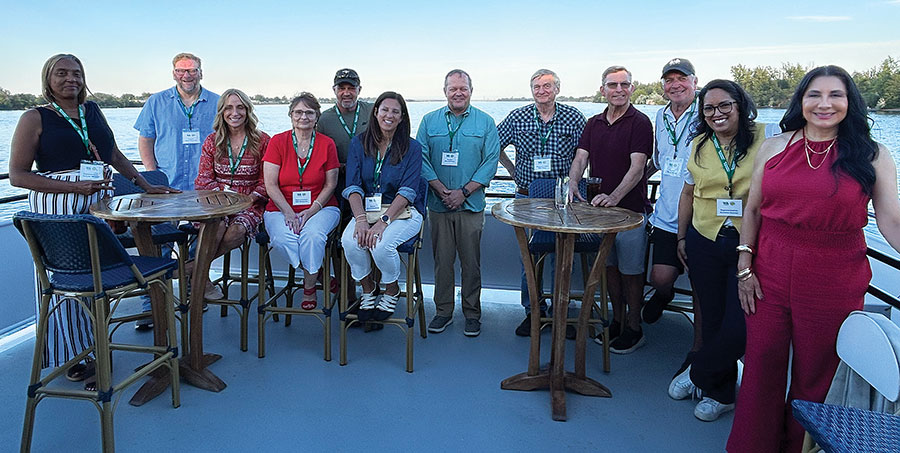
Legislators were treated to a dinner cruise on the Columbia River the evening before the tour. Geordie Bryant Greene, director of government affairs for the potato commission, and Michelle Hennings, WAWG executive director, welcomed the group and briefly talked about the issues farmers are facing. Hennings addressed sustainability and the importance of having a choice of transportation methods, especially barging on the Columbia-Snake River System. Along with fuel and fertilizer, transportation costs are a major expense for wheat producers. Barging provides a low-emission alternative to rails and trucks for moving products through the region.
“There’s 51 million tons of products that are shipped on the river system every year,” she told the crowd. “Washington is looking at a good wheat crop this year. We will have lots of wheat to send out, but input costs are hurting us. We want to work with you on that.”
The next day’s tour began with wheat and ended with potato chips. At each stop, legislators heard about sustainability efforts, farm labor issues, technology, input costs, and conservation practices.
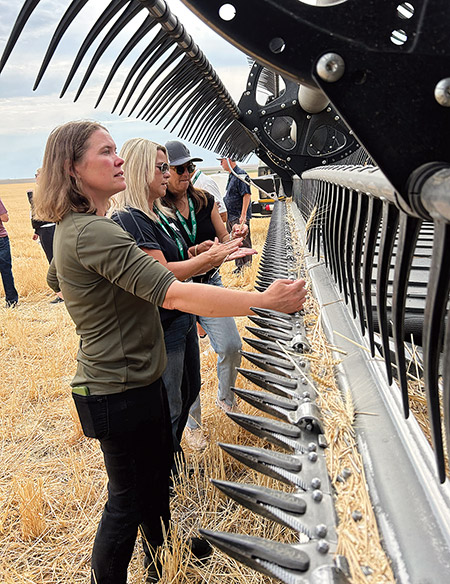

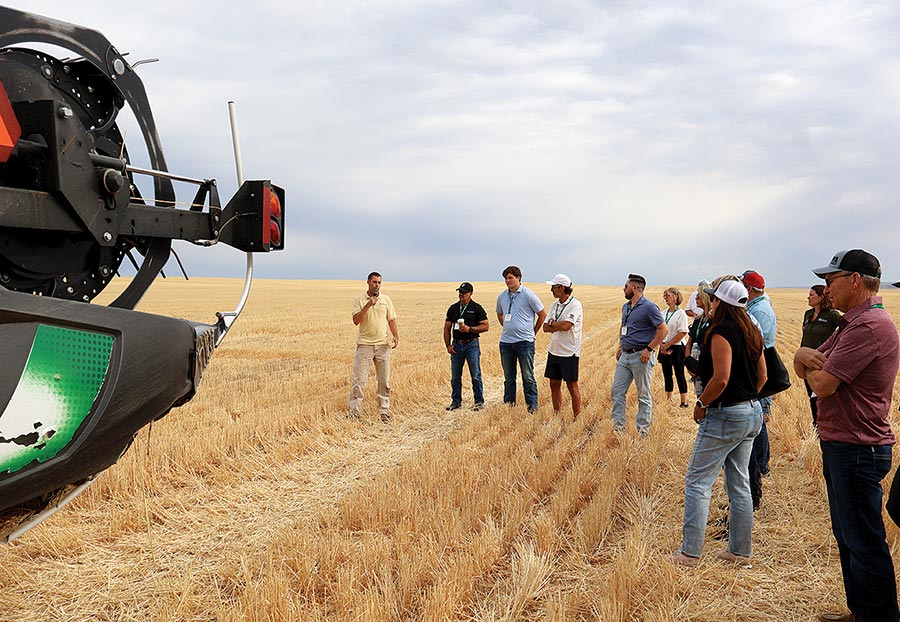
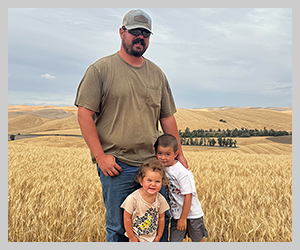
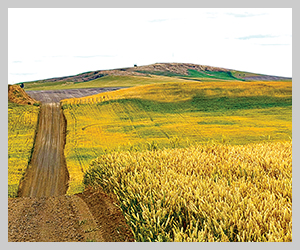
Moon Family Farm. This 5th generation family farm is located atop the Horse Heaven Hills in Benton County. They are a no-till dryland grain farm that sells into both the commodity market and the specialty grains market. Owner Garrett Moon explained the reasons behind their fallow system, in which fields are only planted every other year to allow enough moisture to collect to support a crop. No-till is critical to the farm’s success because the residue (or straw) protects the soil from blowing into the Tri-Cities. Legislators asked about the impacts of the state’s Climate Commitment Act on his fuel costs. Moon explained that fuel “touches” everything, from field work to harvest, and if a bad crop year aligns with a year of bad prices and high input costs, farmers get “clobbered.” Moon told the group that weather is his biggest challenge followed by input costs.
“There’s lots of places wheat can be grown in the world, but in the Horse Heaven Hills, there’s really nothing else we can grow. If prices go down, they can grow other things. We can’t,” he said.
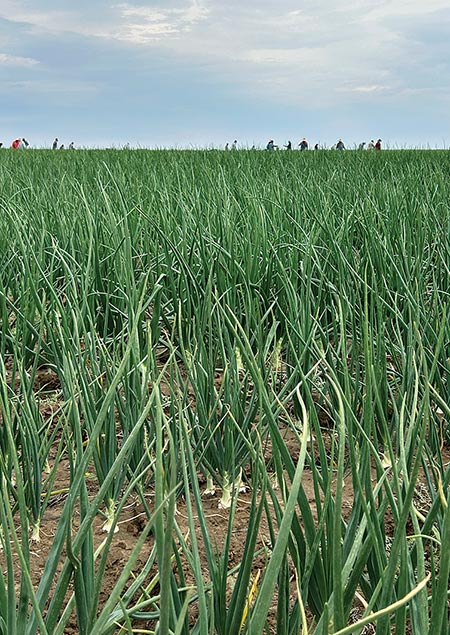

Berg Partnership. Besides growing dryland wheat in the Horse Heaven Hills, the Berg family uses irrigation to produce red winter wheat, soft white spring wheat, field and sweet corn, peas, green beans, alfalfa, and grass seed. Nicole Berg, part of the fourth generation, said their family’s biggest challenge is also input costs, especially energy used to run their pumps and irrigation system. She explained that the current wheat price is about the same as it was in the 1980s, but input costs, which used to rise and fall with the price of wheat, have diverged and are rising regardless of commodity prices.
The Bergs, like many farms in the area, work with farm labor companies that bring in work crews to supplement the farm’s own employees. Becky Ochoa and her husband, Juan, own Labor Plus Solutions, and the Ochoas were on hand to talk to legislators about the impacts of the state’s overtime law. She explained that farmers still need the work done but they can’t afford to pay workers overtime. Technology is taking up the slack, which is eliminating the need for some farm labor. Ochoa said that the overtime law has stopped workers from being able to save up for the slow months, and a seasonal overtime exemption is needed.
“That’s the downfall of having laws and bills written in Olympia with no knowledge of how it actually works,” Ochoa said, adding that some estimates say workers are getting an average of $800 a month less than before the overtime law went into effect.

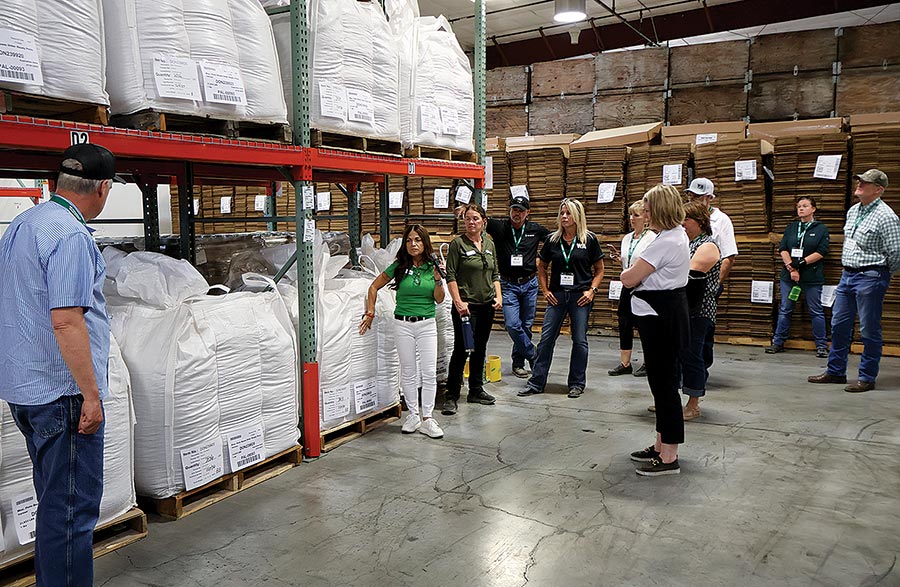

Second Harvest. Before lunch, the group toured Second Harvest’s Pasco Distribution Center. The organization offers a wide variety of innovative programs designed to nourish the community from all angles, addressing immediate hunger needs, long-term food security, and nutrition education. Second Harvest relies primarily on donations, not only for food from growers and processors, but boxes and bags and even space in neighboring warehouses.
“The first harvest makes the second harvest possible,” said Eric Williams, community partnerships director for Second Harvest.
Aaron Czyewski, director of advocacy and public policy at Food Lifeline, talked about a Washington State Department of Agriculture pilot program that provides financial support to producers to get food from the field into the hunger relief system.
“Donations are generous, but there are costs,” he said. Food Lifeline is based in Western Washington and, along with Second Harvest, is part of the national Feeding America network of food banks, food pantries, and local meal programs.
South Columbia Basin Irrigation District. During lunch, John O’Callaghan, manager of the South Columbia Basin Irrigation District, discussed the issues his district is dealing with, including the Columbia Basin Project, the Columbia River Treaty, state water rights, and the East Pasco Basin Groundwater Project, which could contain a million acre feet of unallocated water. He advised legislators to not overcomplicate irrigation matters and said the public needs help in understanding how water rights in the state work.
The South Columbia Basin Irrigation District is one of three major districts operating the massive Columbia Basin Project in central Washington. The district serves roughly 233,600 acres by delivering pumped Columbia River water through hundreds of miles of canals to support agricultural crops like potatoes, wheat, and wine grapes.
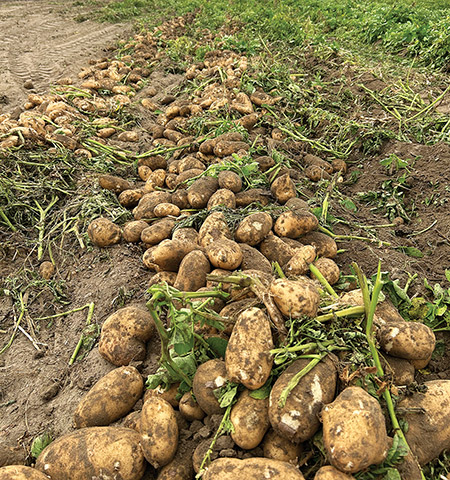
Bunger Farms. Owned by Josh and Jenn Bunger, the Franklin County farm covers 1,000 acres and grows crops like potatoes, sweet corn, peas, and bluegrass seed. Legislators arrived at the farm during the harvest of Ranger Russet potatoes, an early variety that is used to make french fries. Josh Bunger highlighted the cost of parts and equipment as well as labor as big issues he is facing. Like other farmers, he is investing heavily in technology and equipment to replace hired labor that is unaffordable due to overtime laws, especially around harvest.
“Overtime killed work labor,” he said, adding that he already pays more than minimum wage just to get hand crews to the fields.
He explained that he took a 6% decrease on potato contracts this year, but saw his fertilizer increase from $410 to $700 a ton, while parts are up 23% across the board.
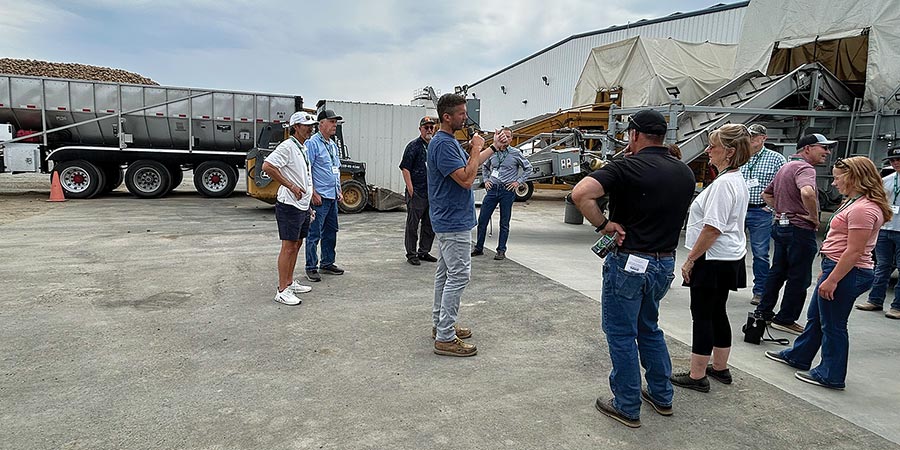
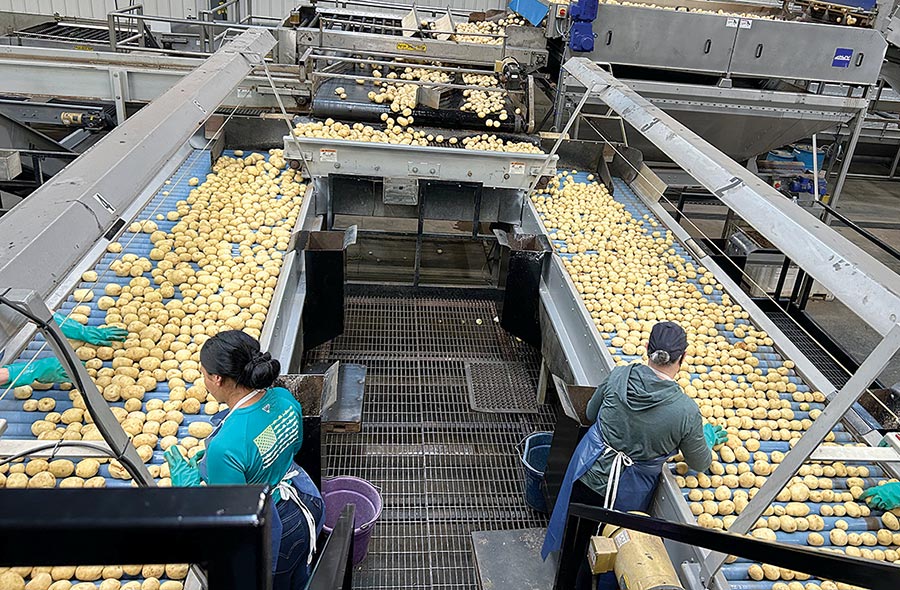
Allied Potato. Internationally recognized as a leading potato grower, packer, and shipper, Allied Potato exports high quality chipstock, seed, and table potatoes. They export to destinations in Canada, Mexico, Asia, Southeast Asia, the Caribbean, Brazil, Central America, and Northern Africa. After a tour of their Pasco plant, growers got to snack on fresh potato chips while hearing about the issues the company faces.
Derek Davenport, one of the owners and director of Northwest operations, said the company is looking for efficiencies to help them cut labor costs, which have increased 80% over the last 10 years. Regenerative ag, such as solar power and cover cropping, is important to the company, but those practices have to have a practical benefit.