





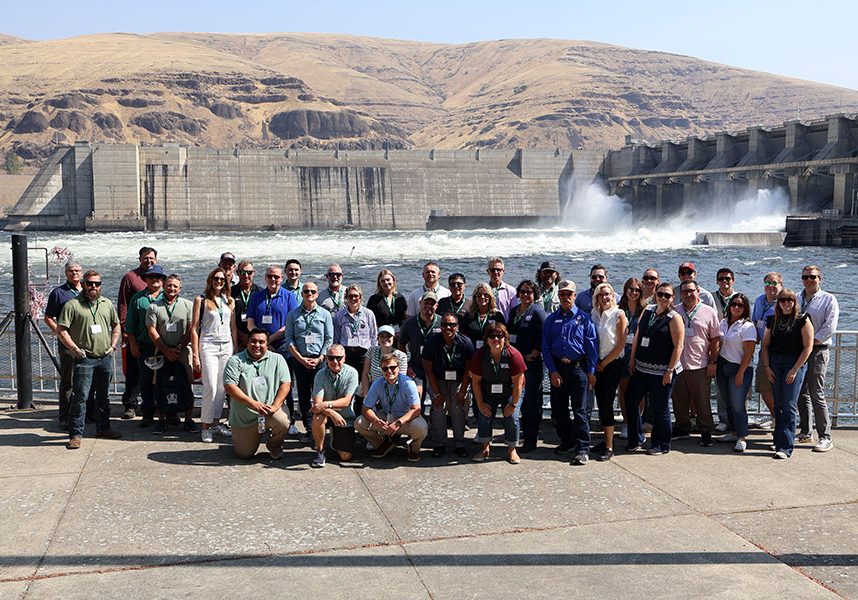
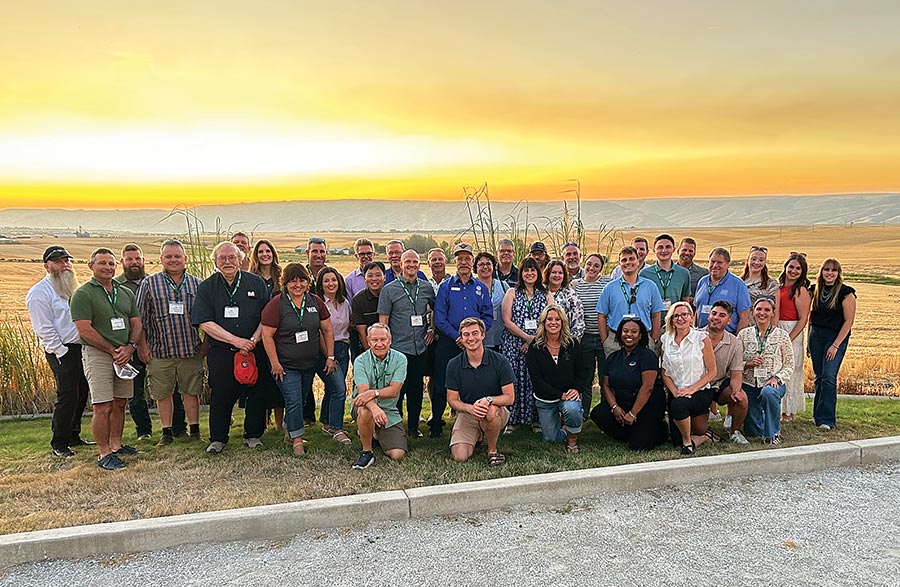
In mid-August, a group of 15 congressional staffers got a crash course in why the lower Snake River dams are so important to the Pacific Northwest.
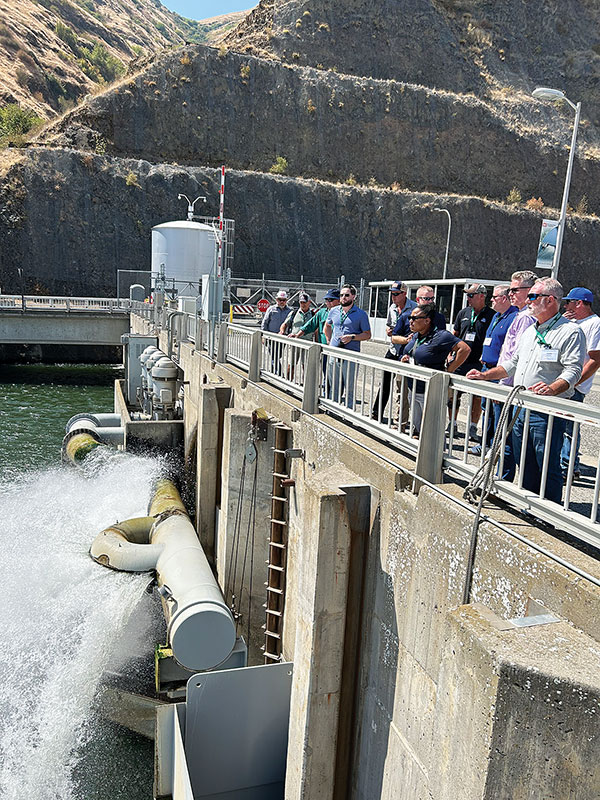
The staffers spent a day hearing from river system stakeholders while they took a jet boat ride through Lower Granite Dam, toured fish research facilities, and visited the Port of Lewiston. The tour wrapped up with dinner at a local winery. Besides the Pacific Northwest, staffers represented congressional districts in Missouri, Florida, Nebraska, and Georgia, as well as the House Transportation and Natural Resources committees.
“The staffers that participate on the tour generally represent congressional offices that have some jurisdiction over the lower Snake River dams,” explained Michelle Hennings, executive director of the Washington Association of Wheat Growers (WAWG). “On this tour, we demonstrate the absolutely vital role the dams play in our region. For many of these staffers, they have no real understanding of this infrastructure until they go through the lock, see how much thought is given to fish passage, and hear directly from the people and communities whose livelihoods depend on the system.”
Besides WAWG, the tour was sponsored by The McGregor Company, Northwest RiverPartners, the Washington Grain Commission, and the Washington State Potato Commission.
The day began with an early morning river users’ panel so staffers had some context on what they were about to see. Hennings moderated the panel, starting it off by talking about how wheat growers use the river system to help keep transportation costs down, pointing out that more than 55% of all U.S. wheat exports move through the Columbia-Snake River System.
“This is a highway. Do you just remove a highway, like I-90? I don’t think so,” she said. “Today, we are going to show you why we need these dams.”
Jennifer Riddle, corporate communications and marketing manager at Tidewater Transportation and Terminals, talked about some of the products Tidewater barges on the system, including fuel, grain, solid waste, and fertilizer. She also pointed out that barges used on the system are purpose-built to fit through the system’s infrastructure. Barge traffic moves 24 hours a day.
“The river system doesn’t close down,” she said.
Mark Freeman, Pacific Northwest government affairs manager for American Cruise Lines, said the company runs six ships from Astoria, Ore., to Lewiston, and it is investing in repair facilities and infrastructure in Lewiston. The cruise ship industry contributes millions of dollars to local economies all along the system.


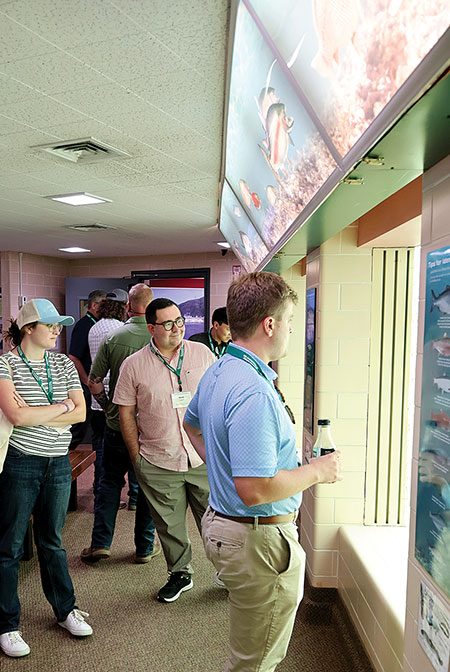
Neil Maunu, executive director of the Pacific Northwest Waterways Association, touched on the history of dam litigation and the need for real data to refute anti-dam rhetoric.
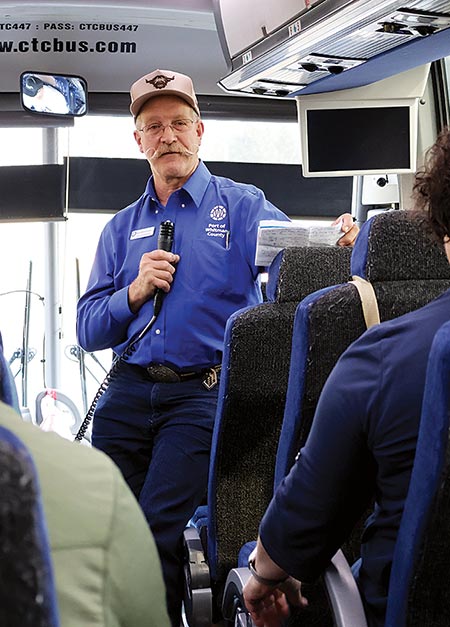
On the bus ride to and from Lower Granite Dam, the group learned about the geology and history of Eastern Washington; how the dams make Washington potatoes some of the best in the world, thanks to irrigation; and how the timeliness of barges allows companies to bring in huge quantities of fertilizer to meet the planting needs of the region’s farmers.


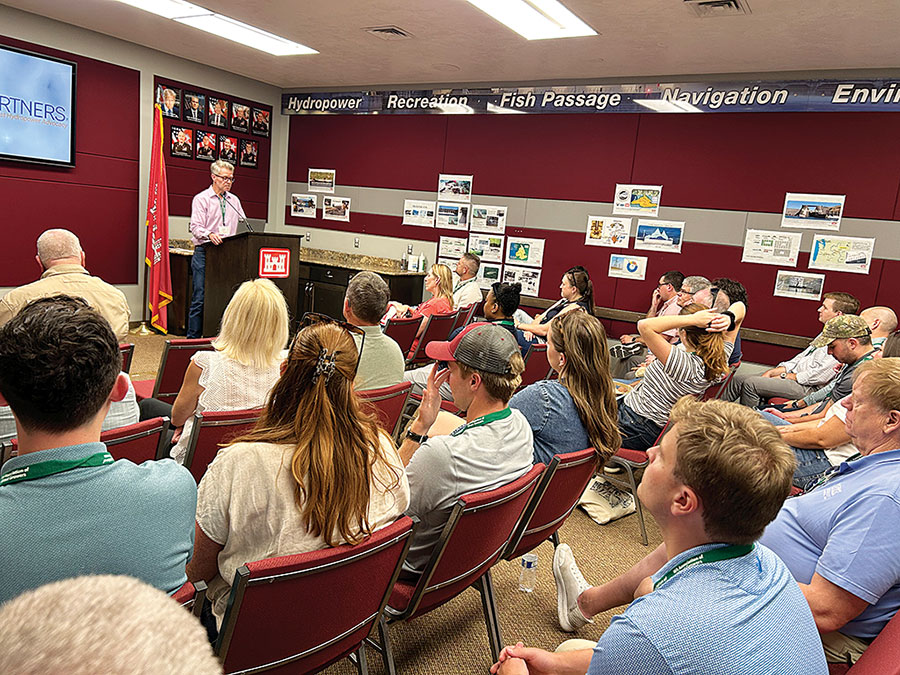
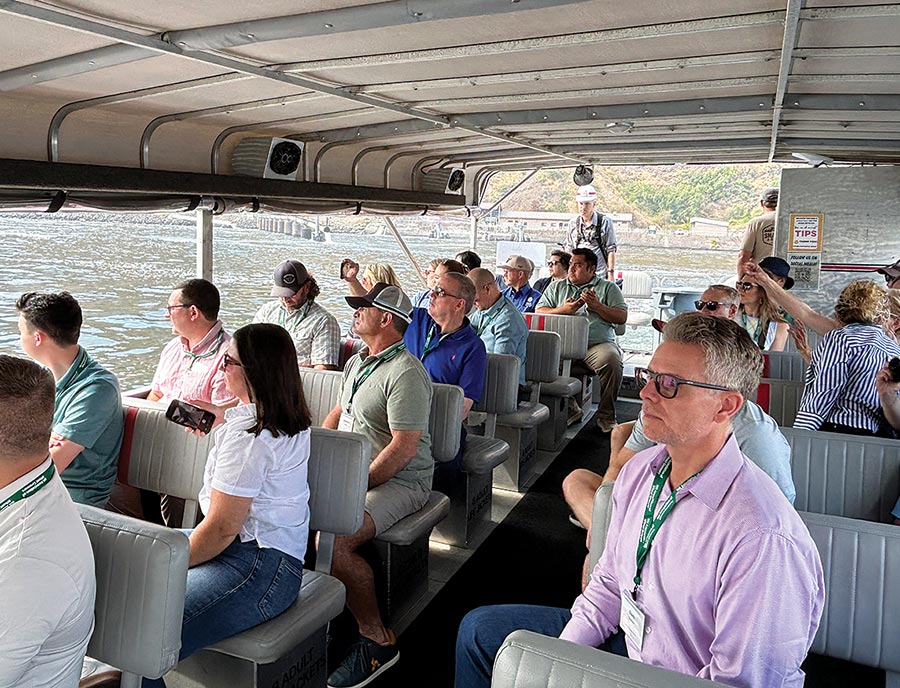
At the dam, Paul Ocker, chief of operations for the U.S. Army Corps of Engineers, Walla Walla District, talked about the history of the dams, fish passage, and energy generation. Clark Mather, executive director of Northwest RiverPartners, explained that hydropower accounts for nearly half of the power used in the Pacific Northwest. Mather said about 70% of the public supports hydropower, and more people have no opinion of hydropower than oppose it (8%).
The last stop of the day before dinner was at the Port of Lewiston. Scott Corbitt, executive director of the port, called the Lewis-Clark Valley “ground zero” if the lower Snake River dams were to be removed, explaining that infrastructure along the river is built to the “state of the river.” If the river level changed, it would cost millions of dollars to rebuild, and many investments would be made obsolete.
“Removal (of the dams) would stop commerce from Pasco up,” he said.


What did the staffers have to say?
At the end of dinner, staffers were asked what they’d be taking away from the tour:
“Something that I will take away is being able to see this infrastructure firsthand to actually know, when we’re talking about this in legislation and committee hearings, what this stuff means, and what it does for different parts of the country.”
“I think the most interesting part for me … was the fish ladders and how that process works.”
“I think the most interesting bit of it all was the dynamic between the different states and how Washington literally has people working at the dam and is fighting against the dam.”
“It was neat to see (a dam) firsthand and see all the different issues that I work on, from salmon recovery to hydropower. It’s one thing to read about (the dams) in D.C. and have hearings and meet with you when you are there, but it’s a completely other thing to be out here on the ground.”
“These issues are central to what we do on our subcommittee … we need to be reminded that the policy we put down, it matters.”
“In D.C., when we just see legislative text and summaries and emails, it’s really easy to distance yourself, but these staff tours put faces to those emails, put families and businesses and communities to them.”
“It was really refreshing to see how across Marine Highway 84, different stakeholders contribute to economic development for local communities. If that went away, you’d lose a lot of economic development opportunities in small communities that have no other way to stimulate their economies.”
“The people we’ve met with and who we’re having dinner with take ownership as stakeholders of the land and who care and are good stewards of that. Seeing that firsthand is awesome and reassures faith in what we do.”
“The most impactful thing that I heard today was two farms per day going under (in Washington state). It is the most important thing that all of us can take away. These issues are complicated. They take a team to fix and work together to find solutions.”
“Everyone I met today is the backbone of this industry, whether it’s wheat, production, transportation, global economy. Everyone in this room is what drives this.”