



Olympia Days 2026 Growers take part in annual trip to educate legislators, advocate for industry
2026February 2026
By Trista Crossley
Editor
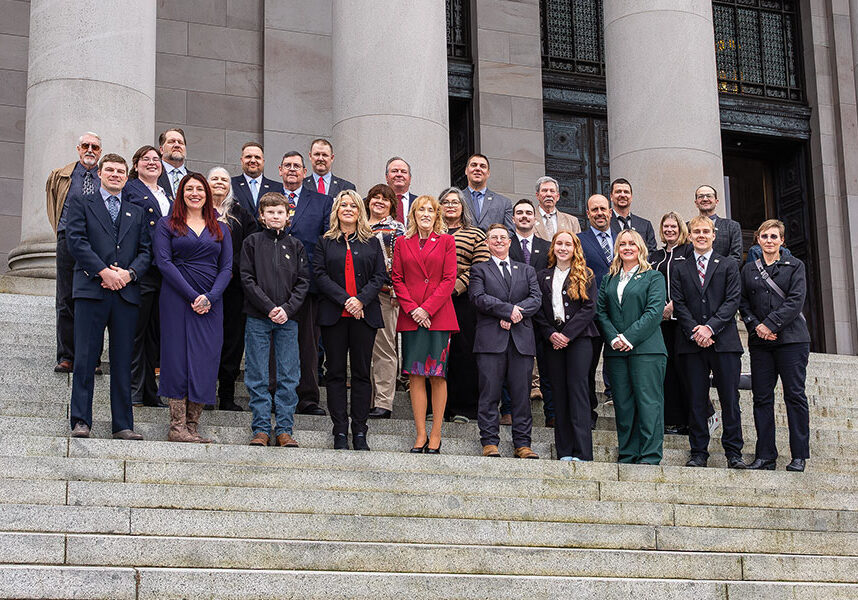
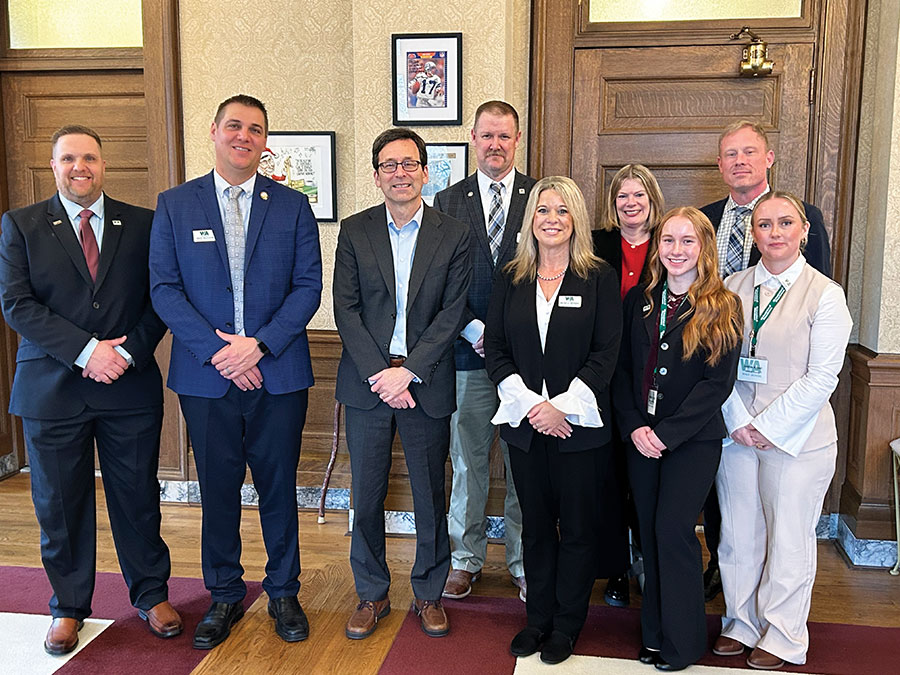
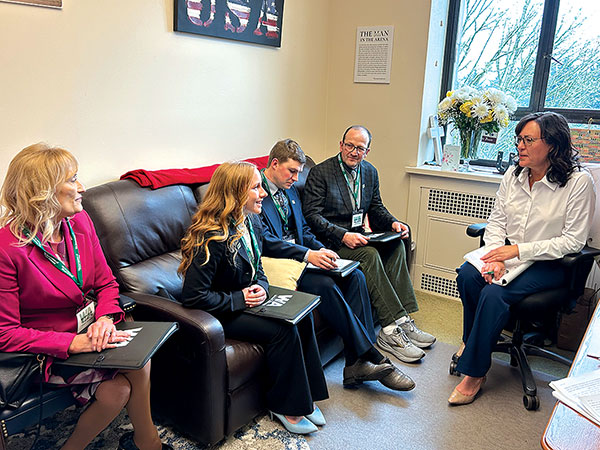
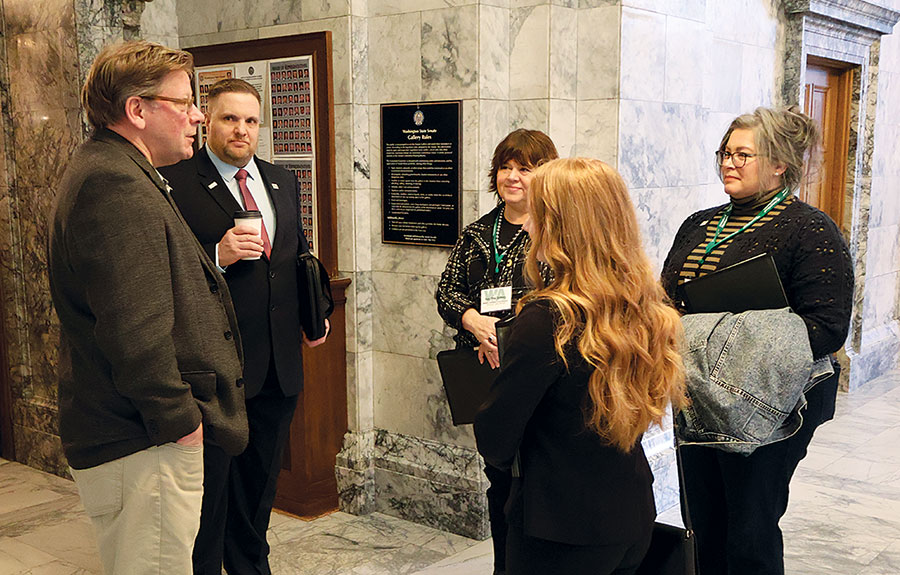
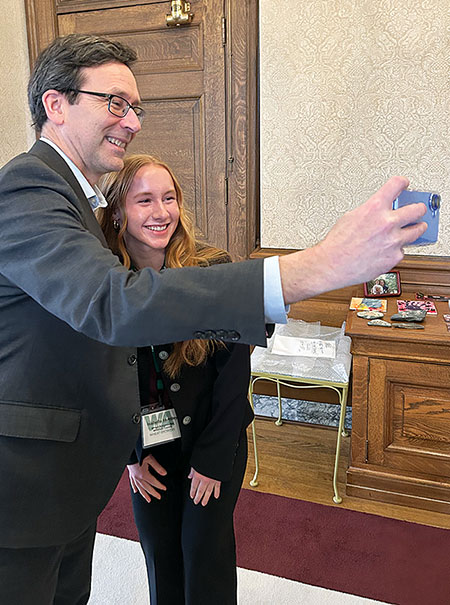
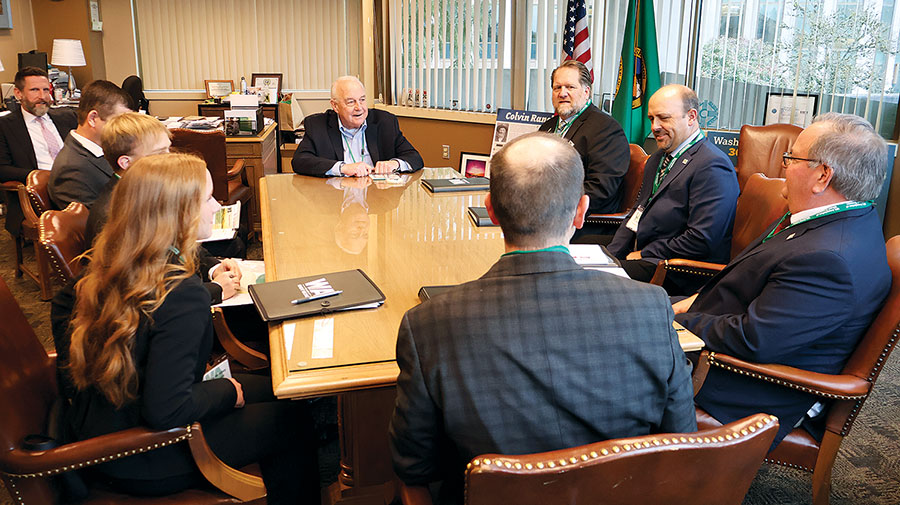
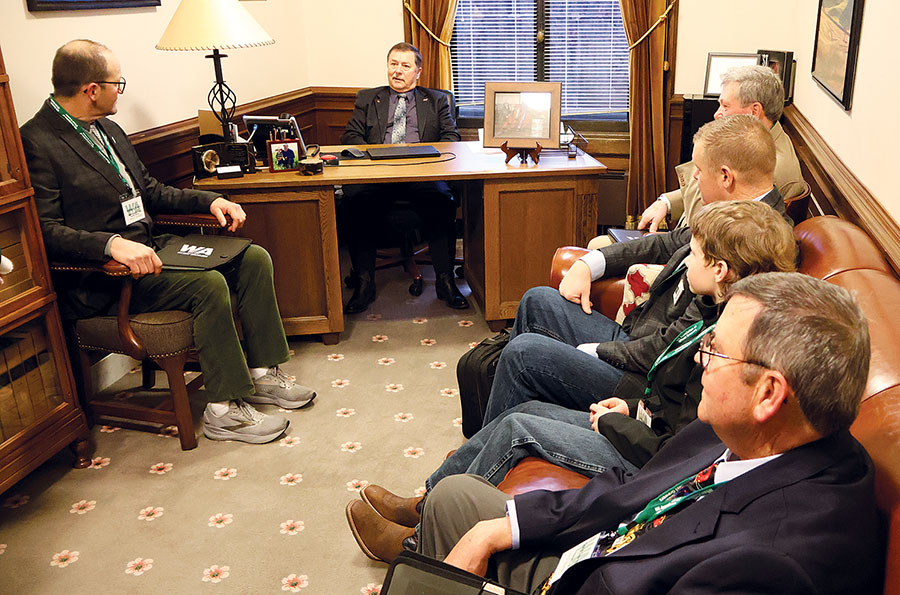
Last month, growers and staff of the Washington Association of Wheat Growers (WAWG) spent three days in Olympia, discussing WAWG priorities with legislators, handing out cookies, and meeting with the governor and his staff to advocate for the state’s wheat industry.
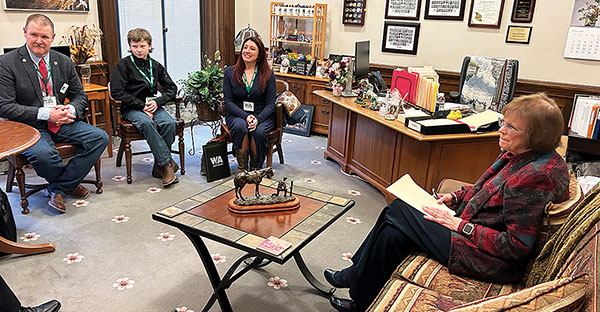
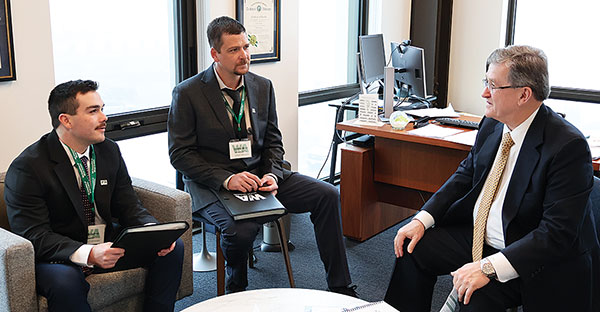
“We met with more than 40 legislators from both sides of the aisle and several agency leaders to talk about the state’s wheat industry and discuss legislation being proposed,” said Michelle Hennings, WAWG executive director. “We also had an opportunity to meet face-to-face with Gov. Ferguson to express our concerns about ag viability. Farmers are facing so many hurdles right now, from onerous regulations to depressed wheat prices to high input costs. We appreciate his time and willingness to meet with us, as well as the growers who took the time to make the trip and advocate for their industry.”
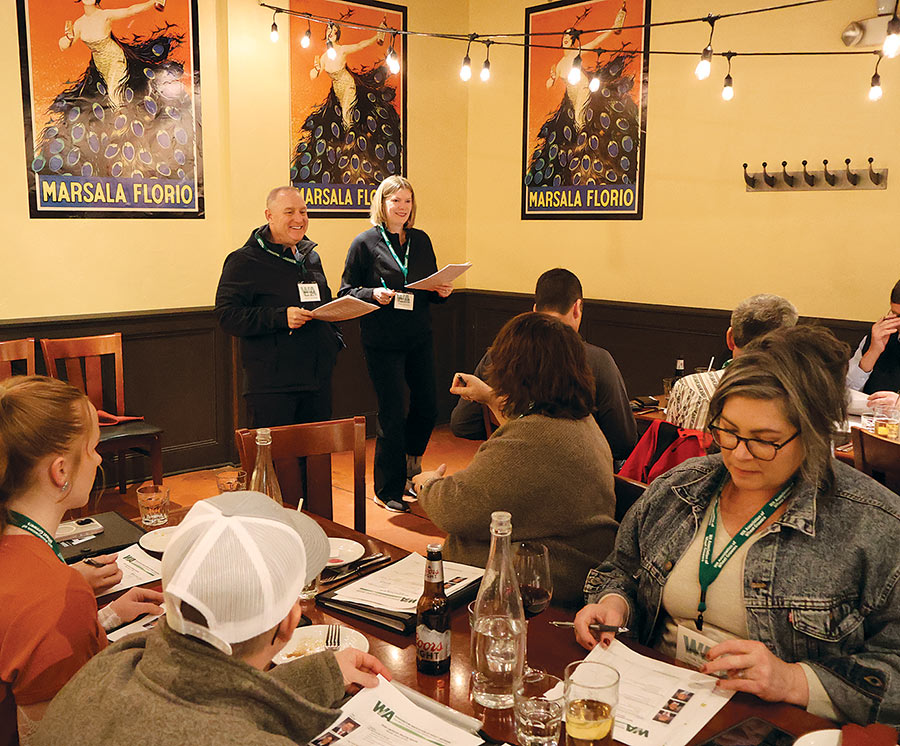
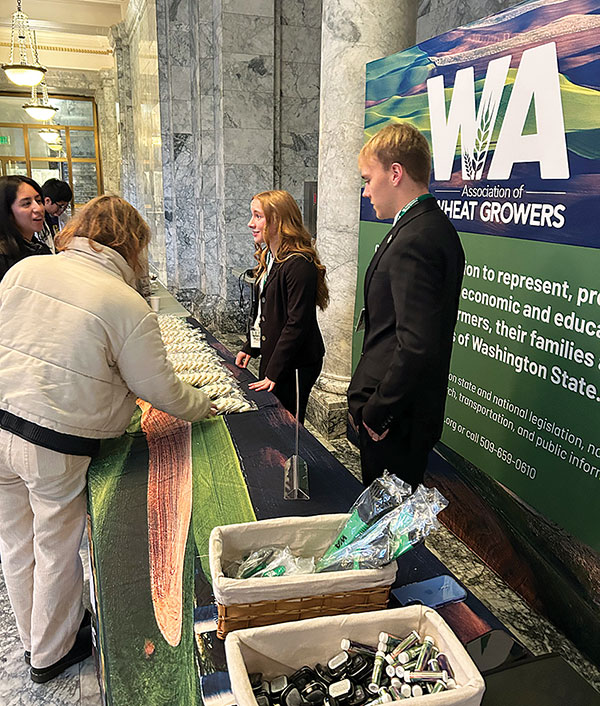
WAWG lobbyists Diana Carlen and Mark Streuli were instrumental in setting appointments and putting together talking points for the meetings, which they reviewed during a dinner with growers the evening before appointments began. The visit was sweetened by cookies and coffee that WAWG handed out in the Capitol Building rotunda to legislators and staff. On hand to help serve the goodies were 2026 Wheat Ambassadors, Isabella Huntley of Colfax, Wash., and Luke Goetz of Coulee City, Wash. The ambassadors also attended legislative meetings and ate lunch one day in the Senate dining room as guests of Sen. Mark Schoesler (R-Ritzville).
Lawmakers were invited to an evening legislative reception at a local restaurant. The event gave growers the opportunity to meet with officials in a more relaxed setting.
“Our reception was very well attended, and I think legislators appreciated the opportunity to be able to relax and mingle with growers in a more casual setting,” Hennings said. “We were able to continue some of the discussions we started earlier in the day and meet with legislators who were unable to set appointments with us.”
While at the capitol, growers were able to sit in on Senate and House hearings. They were also able to share some upsetting information recently released by the U.S. Department of Agriculture (USDA) and the Economic Research Service that shows Washington was ranked last in the nation for take-home pay in 2024.
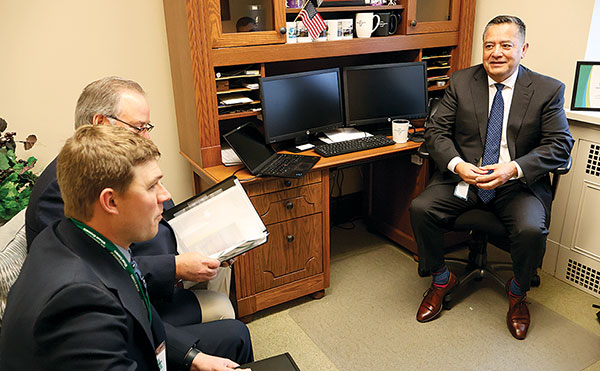

“Farmers know how tough it has been to make a living farming, but that information is sometimes hard to quantify,” said Gil Crosby, WAWG president. “Being able to back that up with USDA data puts hard numbers on what we are experiencing. It was eye-opening to some of the urban legislators we met with.”
WAWG’s priorities for the 2026 Washington State Legislative Session include:
Maintaining a viable agricultural industry in the state is vital for food security, the state’s economy, and environmental stewardship. The agriculture industry in Washington state faces significant challenges. According to data from the USDA, Washington state lost 3,717 farms from 2017 to 2022. That means approximately two farms a day are lost, every single day, with an average 450 acres of farmland taken out of production every day as well. It is essential that Washington adopt a “do no harm” approach to new taxes or regulations, especially related to food production. Washington state ranks 50 in the U.S. in farm take-home income at a negative $259 million. Our public policy focus should be to reduce, not add to, the cost of getting Washington-grown products to the dinner tables of Washingtonians, Americans, and global consumers. Any added fees, compliance burdens, or permitting delays fall disproportionately on producers who are operating on tight margins, especially in rural communities. Increased costs weaken local economies, threaten the viability of family-run operations, and make it harder for Washington-grown products to reach markets. Policies that keep production and transportation costs manageable directly support the economic health of rural areas and the overall stability of the state’s agricultural sector. WAWG urges the Legislature to remember the uniqueness of the industry when crafting public policy that may result in increased production costs and further threaten the viability of family farms in the state.

Exempting lubricants from the Climate Commitment Act. California and Oregon currently exempt emissions from lubricants, including motor oil, hydraulic fluid, transmission fluid, and grease, from their cap-and-trade programs, recognizing that lubricants aren’t combusted, their emissions aren’t direct, and can’t be precisely quantified. Unfortunately, lubricant emissions are covered under Washington’s Climate Commitment Act, which results in farmers and Washington drivers paying a carbon surcharge. As Washington is pursuing linking their program with California, Washington state should follow California and improve affordability for the agricultural industry and all Washington drivers. Exempting emissions from lubricants would recognize their similar role as necessary, noncombustion inputs that support the operation and maintenance of farm equipment. As essential components for running tractors, potato diggers, and combines, lubricants such as engine oil and hydraulic fluid are recurring maintenance inputs in agricultural production. WAWG supports Senate Bill 5856 to reduce the cost of growing and harvesting food, keeping Washington farms productive and competitive.
Protecting future viability of ag through voluntary conservation programs. WAWG is supportive of voluntary conservation programs that offer flexibility and fairly compensate farmers for riparian protection. WAWG stands in firm opposition to new regulatory requirements such as mandatory riparian buffers based on Site Potential Tree Height as it threatens the future viability of agriculture by removing significant portions of productive farmland out of production. In addition, mandatory buffers also jeopardize federal conservation funding. WAWG also supports full funding of voluntary conservation programs like CREP and the Voluntary Stewardship Program.
Preserving the lower Snake River dams. WAWG supports keeping the lower Snake River dams intact as they are vital to Washington’s and the nation’s economy and transportation infrastructure. WAWG also supports funding for maintaining the Columbia-Snake River System. Removal of the four lower Snake River dams would significantly increase carbon emissions and jeopardize health, safety, and livelihoods in already economically fragile local and regional economies. WAWG supports the findings in the federal EIS and opposes any state, legislative, or administrative effort to remove or disrupt the Snake River dam system, including the recent U.S. Government’s commitments in support of the Columbia Basin Restoration Initiative. WAWG is deeply disappointed by the lack of transparency in the mediation process. Despite consistent efforts to engage, Washington’s agriculture industry was effectively excluded from this process even though our members would be directly impacted by significant changes to the river system.
Pesticide safety. Access to pesticides is essential to keeping Washington agriculture productive and globally competitive. WAWG supports the professional use of crop protection products, which have been shown to be safe and effective through science-based research.
Providing seasonal flexibility to benefit both workers and farmers. Agricultural workers became eligible for overtime pay in 2021 after the Legislature removed the agricultural overtime exemption and adopted a phased-in approach. In 2022, overtime kicked in after 55 hours in a week, dropping to 48 hours in 2023, and down to 40 hours in 2024. Unfortunately, Washington’s overtime requirement does not address the seasonal needs of Washington agriculture given the time-sensitive nature of growing and harvesting mature field crops and vegetables. Washington pays 462% more in labor costs than the national average and 76% more in overall operating costs, The agricultural industry is unique from other types of industries because of pressures on farmers, ranchers, and workers caused by issues mainly out of their control such as uncertainty of weather, yields, calving, national and international shifts in trade policy, and transportation inconsistencies. In addition, the overtime requirement has unintended consequences for farmworkers. A recent examination of California’s overtime requirement for agriculture conducted by a professor at the University of California-Berkeley found that as a result of the overtime law, California farmworkers worked a total of 15,000 to 45,000 fewer hours and earned a total of $6 to $9 million less. WAWG supports legislation allowing farmworkers to earn money for up to 50 hours per week for 12 weeks of the year before overtime provisions kick in. This legislation will allow agricultural employers limited flexibility to shape work schedules during a narrow window of time to best fit the peaks of labor demand, thereby providing them some ability to weather the unpredictability of agricultural work and ensure that Washington’s second largest industry remains vital and strong while also ensuring security for farm workers.
Protecting existing tax policy. Retaining all food- and farm-related tax incentives are critical to the agricultural industry. Agriculture tax incentives are a valuable benefit to our economy and offer farmers a more level playing field with other major ag production states. Incentives are intended to be a long-term state investment into the agricultural industry.