





Safety shouldn’t be an afterthought
President's Perspective
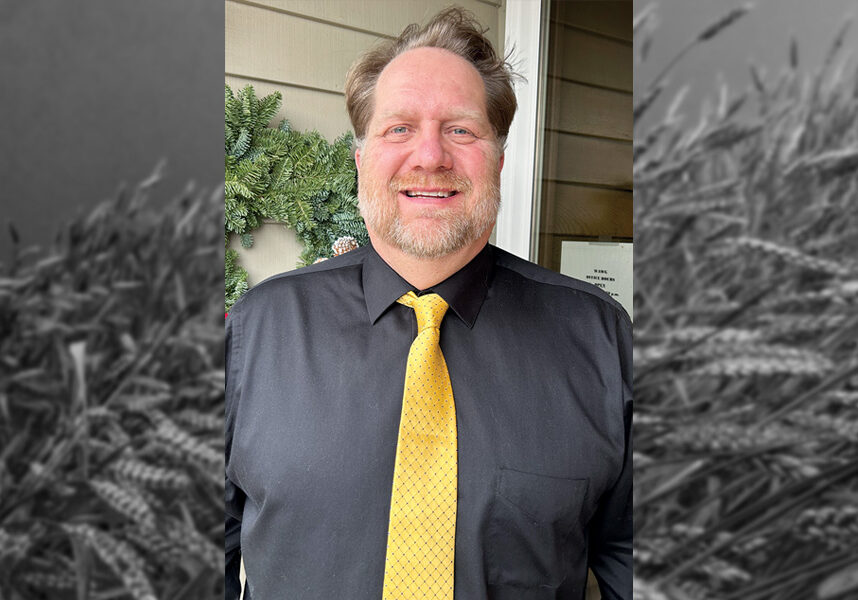
By Gil Crosby
President, Washington Association of Wheat Growers
Growing up on a farm, all of us heard our parents yell from a distance, “Be careful!” Being around farm equipment, I’m sure we’ve all had close calls — and sometimes not-so-close calls. When we are younger, farm safety is mostly just a warning to keep us from getting hurt. As we get older, though, safety becomes even more important because injuries happen more easily. We’re not as athletic as we once were, and we start thinking twice about jumping off a piece of equipment or taking shortcuts just to save a couple of minutes.
We all need to stay cautious. I’ve fallen off a drill by not paying attention and thinking I could make the jump, only to come up short. I’ve even thought I could stand on a shaft and that it wouldn’t spin; the next thing I knew, I was looking up at the sky. The funny thing is that farmers are both the safest and least safe people alive. We can back a 40-foot drill into a shed with an inch to spare, but somehow still trip over the dog walking to the shop or spill coffee in the truck before the day even starts.
With all humor aside, farming is one of the toughest and most dangerous jobs there is. Long hours, fatigue, equipment, weather, and stress all have a way of catching up with people. Sometimes the best safety tool is simply slowing down and thinking before doing something. Ironically, the safest days usually come after something goes wrong. Suddenly we start asking ourselves, “Did I set the brake?” “Is that baling wire really going to hold?” and the all-time favorite, “It’ll probably be fine.”
Agriculture as a whole ranks fourth in the U.S. for work-related deaths. Because of that, it’s important to take farm safety seriously and use the resources available. There are several good places to find information on making farms safer, including the National Association of Wheat Growers’ safety brochure at wheatworld.org/wp-content/uploads/2020/07/NAWG-Farm-Safety-Brochure_July-2020.pdf and the National Institute of Food and Agriculture at nifa.usda.gov/topics/agricultural-farm-safety.
In this issue, we cover another area of farm safety that tends to fly beneath the radar: buried utility pipelines. Much of this infrastructure was installed in our parents’ or grandparents’ time, and although signage is required, that doesn’t always mean it’s there. It can be a bit of a hassle, but anytime digging beyond normal farm activity occurs, a call to 811 can prevent a world of headache later.
At the end of the day, no crop, repair, or shortcut is worth risking your life or someone else’s. Farming will always involve hard work and risk, but taking an extra minute to slow down, pay attention, and think things through can make all the difference. We all know someone who has lost a loved one or friend to a farm accident, and those accidents can happen at any age and at any time. Farming has a way of making people comfortable around danger because it becomes part of everyday life. A tractor, an auger, a PTO shaft, or even the drive home after a long day on a piece of equipment can feel routine right up until the moment something goes wrong. The best thing any farmer can do is make it home safely at the end of the day.
Tags