



Showing up matters the most
2026January 2026
By Gil Crosby
President, Washington Association of Wheat Growers
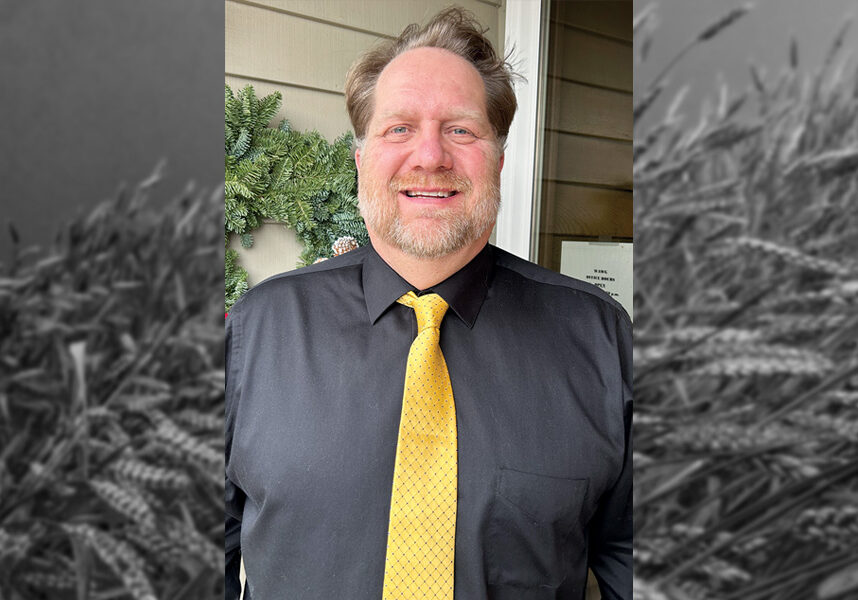
If you’ve ever wondered what happens when a farmer tries to navigate the maze of state and federal politics, you are in the right place. Working in Olympia and Washington, D.C., has taught me that the distance between a farm and lawmakers is far greater than the miles on a map. I have watched how decisions about agriculture are influenced, debated, and sometimes misunderstood.
The first time I attended the Washington Association of Wheat Growers’ (WAWG) Olympia Days, I was a bit nervous, but those nerves quickly subsided after our planning dinner the night we arrived. I don’t remember who initially told me, but I have been told several times since then: just tell your story as it pertains to the topic at hand. I have always tried to relate my personal experiences in some way to find common ground with legislators, or at least they are hearing about experiences of a farmer in rural Washington state. Attending Olympia Days has really set me up for success in D.C. as well and has always been a great experience. You find out quickly that some legislators have never been across the mountains and have no idea what it is like to live in rural America, where your closest neighbors are miles away, not just on the other side of a backyard.
D.C. can be very intimidating at first, but like anything, the more you do something, the more comfortable it gets. I have been inside most of the Washington state delegation’s offices, and each one is different, but at the same time, similar. One thing common to all of those offices is that if growers don’t speak up, someone else will speak for them. For the most part, every politician is keen to hear our story and perspective as farmers and how policies impact our farms. I’ve had many great opportunities to go to D.C. with other groups from all over the U.S. One group that stands out is the Modern Ag Alliance, which provided opportunities to visit with lawmakers from other states like North Carolina, Maine, Montana, and Idaho. This diverse group of different ag sectors, such as cotton, beets, wheat, barley, and soybeans, talked about MAHA (Make America Healthy Again) concerns and the effects it would have on farmers, such as the removal of glyphosate from our operations and the creation of a pesticide label standard across every state. It was a great opportunity to hear from other states and to be able to share Washington state’s ag story. I have also had opportunities to attend D.C. with Washington State University (WSU) and talk about research funding and how important it is for both WSU and our state’s ag industry. We highlight the importance of research to our farmers and how our close partnership determines what is essential for our success. There is always the added bonus of getting to see the nation’s capital from the inside out and to attend some great events, for instance, the “Taste of Washington” that was in the historic Kennedy Caucus room and was attended by most Washington state legislators and their staff. A truly proud moment for everyone.
At the end of the day, whether I am walking across the Capitol Mall in D.C. or climbing the steps in Olympia, my hope is that more people from rural communities, farmers, ranchers, business owners, and young leaders find their way into these conversations. I’ve learned that policy moves fastest when no one is watching. Agriculture can’t afford to sit on the sidelines, or our farms, our livelihood, and our future will be in jeopardy. The next chapter belongs to all of us, and I intend to keep showing up. I hope you will, too.