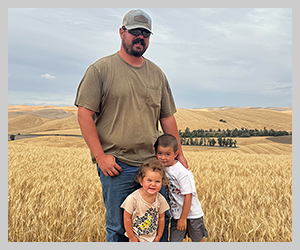






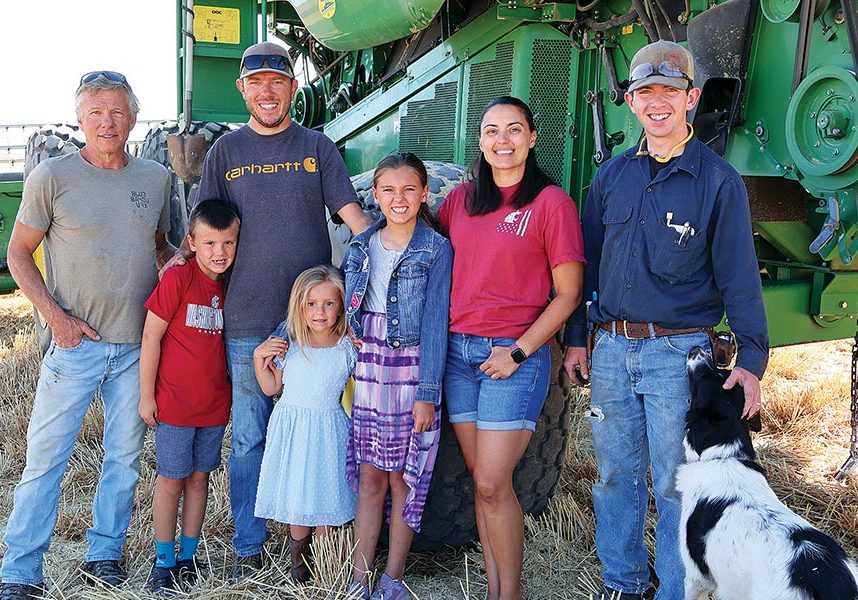
As Andrew and Jessica Schafer’s kids — Riley (9), Aiden (7), and Sloan (4) — grow, so does the struggle to keep up with their favorite harvest tradition.
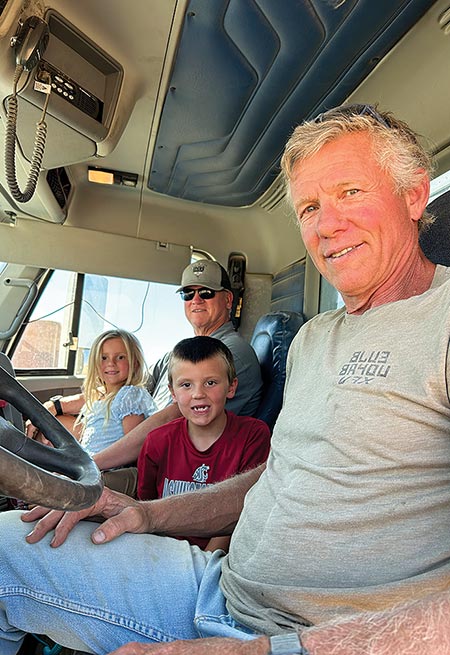
“We pile all five of us into the combine to go cut the outside round and test the wheat, to make sure it’s ready,” Schafer explained. “We have photos to prove it for the last four years. It’s getting more cramped (in the combine cab) the bigger they get.”
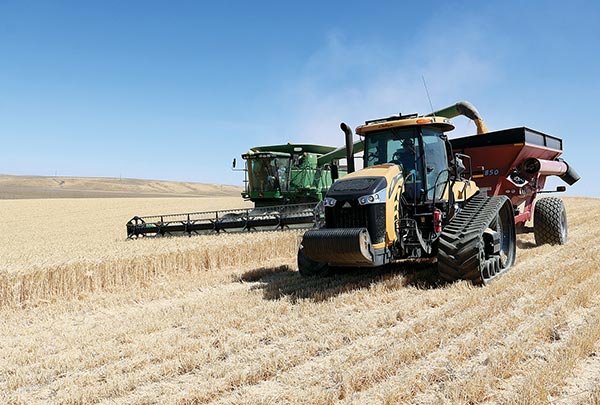
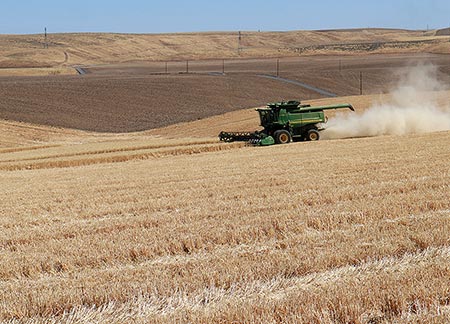
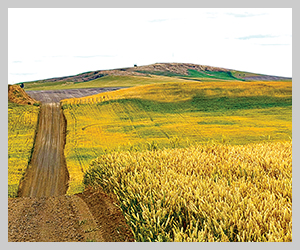
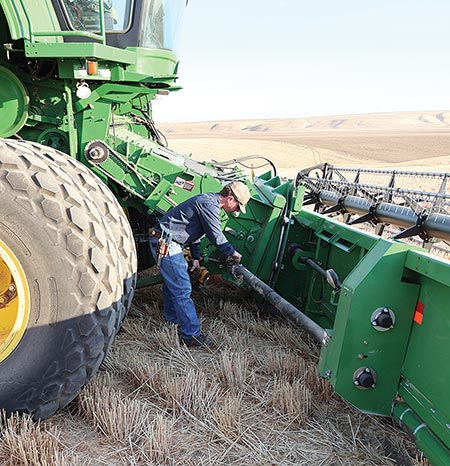
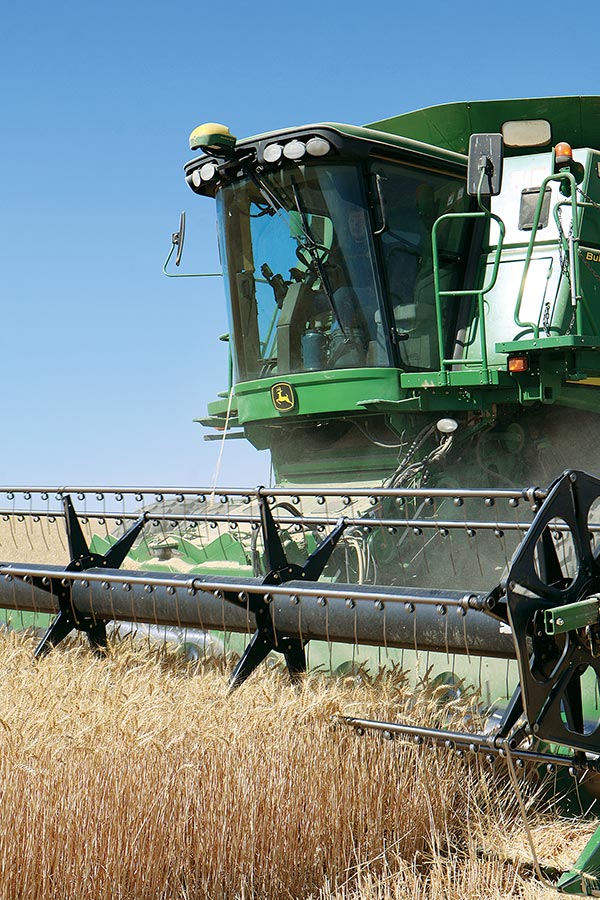
The Schafer family farms in Franklin County between Connell and Kahlotus. Schafer is the fourth generation. The farm, Windy Acres Farms, was established in the 1940s by Schafer’s great-grandfather. In 2013, Schafer and his wife left careers in hospitality to take up farming full time. They mostly grow two to three varieties of winter wheat for seed for local seed dealers. Schafer said he drives the combine a little slower when harvesting to help the machine clean the grain better.
“We don’t have as much foreign material in the bulk tank, and that makes it easier for the seed cleaner to process the grain and be able to clean it for seed purposes,” he said. “We also have everything segregated. We have to blow out combines and trucks and clean out augers and pits and tanks when we switch varieties.”
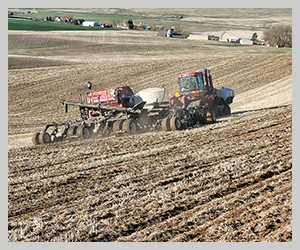
During harvest, Schafer has a “smorgasbord” of help. He has several cousins and friends who rotate in to help. One constant is full-time employee Paul MacDuff, another relative. That rotation is likely to include Schafer’s kids at some point in the near future. He said his oldest daughter, Riley, spent a few solo hours on the chisel plow this spring and is excited to learn to drive the combine. Having family involved in the farm is very important to Schafer.
“I think it’s where our roots began. It kind of centers everybody,” he said. “We’re all so caught up in the social media world and ‘keeping up with the Joneses’ that it really allows everyone to center themselves and realize what’s important in life and realize it’s an important task, feeding the world and our community. The value of a hard day’s work and seeing what you accomplished in a day is pretty rewarding.”
Going into the 2026 harvest, Schafer was anticipating challenges with fuel and labor costs.
“We use probably 350 gallons of diesel a day, and with the current cost of fuel, we’re probably talking a $1,000 difference a day on operating expenses alone from last year,” he said.