






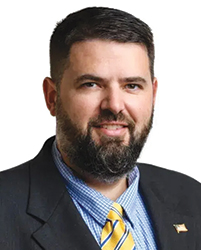
Patrick Bell, the recently appointed Farm Service Agency (FSA) state executive director, is no stranger to the state’s agricultural industry, but the scale of it took him a little bit by surprise.
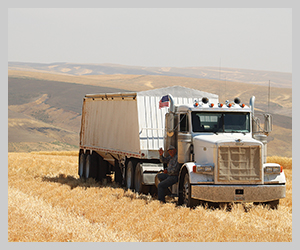
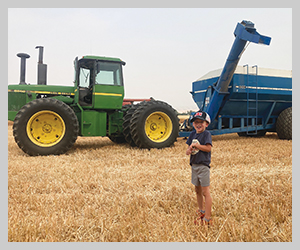
“I always knew the importance of commodities and the row crops, especially being based in Spokane, growing up in Springdale for part of my life, and growing up in livestock. I was very active in 4-H and FFA,” he said. “But now, being out on the ground, it’s just the scale that people are operating at. These aren’t 20- or 40-acre tracks. These are several thousand-acre tracks. I think all farming and ranching comes with risk, but it’s really given me an appreciation for their concerns and the day-to-day of why the programs that we administer at FSA are so important.”
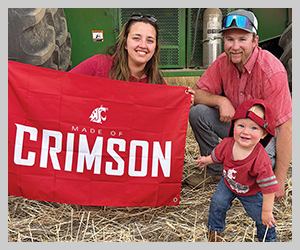
Before landing at FSA in January, Bell held leadership positions at Spokane County and with former Congresswoman, Cathy McMorris Rodgers, and worked in higher education. He is a 5th generation farmer and rancher. The family has a livestock operation in Springdale, and they raise alfalfa, triticale, oats, and barley. Bell helps out on the operation, mainly as the guy “that runs and gets parts” and has helped the family establish a direct-to-consumer beef brand.
In his previous roles, Bell has interacted with FSA and the U.S. Department of Agriculture, but seeing it from the inside has given him a healthy appreciation for the dedication of the FSA staff and the lengths they go to in helping producers. He is determined to put producers first and make sure his office is responsive to producers’ concerns.
“It’s all about customer service. When the president and the secretary say they’re putting the farmer first, we make that real on a day-to-day basis,” he explained. “The secretary has a goal for producers to hear back within hours, not days and weeks. I’ve said before, responsiveness, to me, is next to godliness. People appreciate an answer, even if it’s not good news.”
Since January, Bell has been meeting with producers and industry groups, including a meeting with wheat growers in March about the Conservation Reserve Program. He said some of the concerns producers have are with the complexity and eligibility of programs. He is concerned that if producers are having trouble understanding the programs, they might decide they aren’t worth their time. That’s where his staff comes in.
“I want our folks to help translate the information, and, to the extent we’re able to, help them with an application and understanding the types of documentation we need,” he said. “We’ve been doing some statewide webinars and trainings on our latest program, SDRP (the Supplemental Disaster Relief Program), to help certain sectors get access to our specialists. We’ve got some really smart people. I’m glad to have them.”
Staffing is still an issue in the state and county offices, but Bell said they’ve been given the go ahead to backfill some positions and to get ready for upcoming retirements. He added that he’s been impressed with USDA’s rollout of login.gov, which has helped streamline and simplify applications.
Besides improving customer service and response times, another of Bell’s goals is to raise awareness of FSA programs through continued outreach. He’s open to invitations from producer groups or just meeting producers at a local coffee shop who want to hear the latest FSA updates. He plans to share feedback with FSA leadership so they can get a sense of what’s happening on the ground and what kind of questions producers have.
“I think I can be an advocate in this role. Certainly, when it comes to concerns or needs that aren’t being met, people want that feedback elevated to USDA leadership. I have the channels to do that,” he said. “If (producers) ever run into trouble or want to make me aware of something, I’ll make myself available, if that means coming out for coffee or farm visits or tours. I’m planning to be doing a lot of that this summer. I really want to get out, meet people, and get the story from the ground.”
Bell can be contacted at (509) 323-3000 or by email at Patrick.Bell2@usda.gov.