



Over the years, I’ve lost count of how many times someone has asked me, “Why do you farm?” Is it the long hours, the hard work, the low pay, or maybe the camaraderie of having a beer cooler in the back of every pickup?
For me, the answer is simple. I farm because it makes me feel connected to something older and bigger than myself. Farming has a way of teaching life lessons you can’t learn anywhere else. It pushes you to grow through the daily, weekly, and seasonal frustrations, but it also rewards you with those small victories that make it all worth it. It’s not always easy, but it’s the life I’ve chosen, and I wouldn’t trade it for anything.
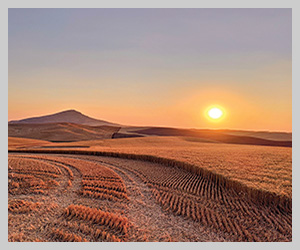
I’ve grown up on a family farm just south of the town of Fairfield, in southeast Spokane County. Other than my time away for college and a short stretch in Europe, the farm has been the constant thread in my life. Over the years, my reasons for farming have changed as much as the landscape itself, shaped by shifting mindsets, evolving practices, and the innovation of new technology. Farming has transformed at a remarkable pace over the last 30-plus years. We’ve moved from conventional tillage to direct seeding, adopted precision tools and smarter equipment, and faced a steep learning curve every step of the way. Each change has challenged not only how we work, but how we think about sustainability, efficiency, and what it means to be good stewards of the land. Yet, through all that change, some things remain the same: the satisfaction that comes from working the soil, watching the seasons turn, and knowing that this land still has more to teach me.
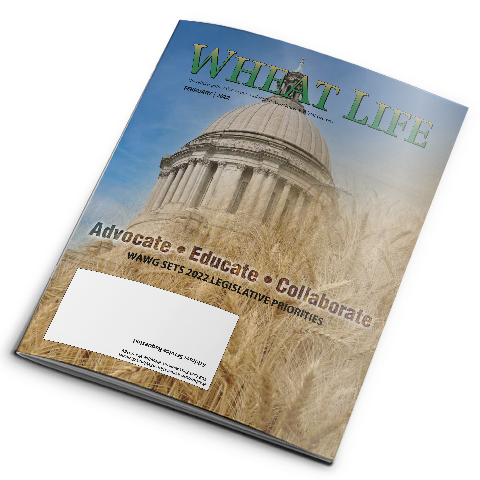
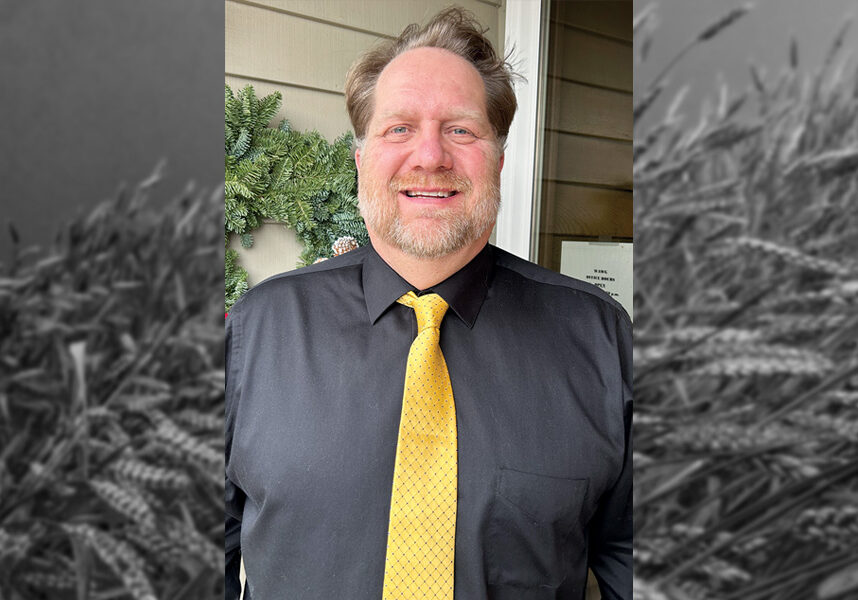
As president of the Washington Association of Wheat Growers (WAWG), I hope to carry on the association’s core principles and continue working to ensure the livelihood of Washington’s wheat growers and rural communities. During my time in the WAWG chairs, I have truly enjoyed nearly every aspect of what we do, from advocating for our growers in Olympia and Washington, D.C., to collaborating with partners at the Washington Grain Commission and the National Association of Wheat Growers. My involvement with WAWG has provided many memorable experiences, but one of the most memorable was receiving a private, after-hours tour of the House of Representatives from a sitting member of Congress, a moment that reminded me how far-reaching our advocacy efforts can be, and how important our voice is in shaping agricultural policy.
Looking ahead, my goal is to strengthen the connections between our growers, our communities, and the policymakers who influence our industry’s future. I believe the success of Washington wheat depends on more than good yields. It depends on strong relationships, shared knowledge, providing people a deeper understanding of our industry, and creating a united voice that represents all who care for this land. As president, I’ll work to build on the legacy of those who came before me, embrace innovation where it benefits our farms, and ensure that the next generation has the same opportunities and pride in farming that have shaped my own life. It is a true honor to serve, and together, we will drive agriculture toward a thriving, more sustainable tomorrow.