





CRP frustrations mount Wheat growers lament limitations of conservation program in low rainfall zones
Natural Resources
By Trista Crossley
Editor
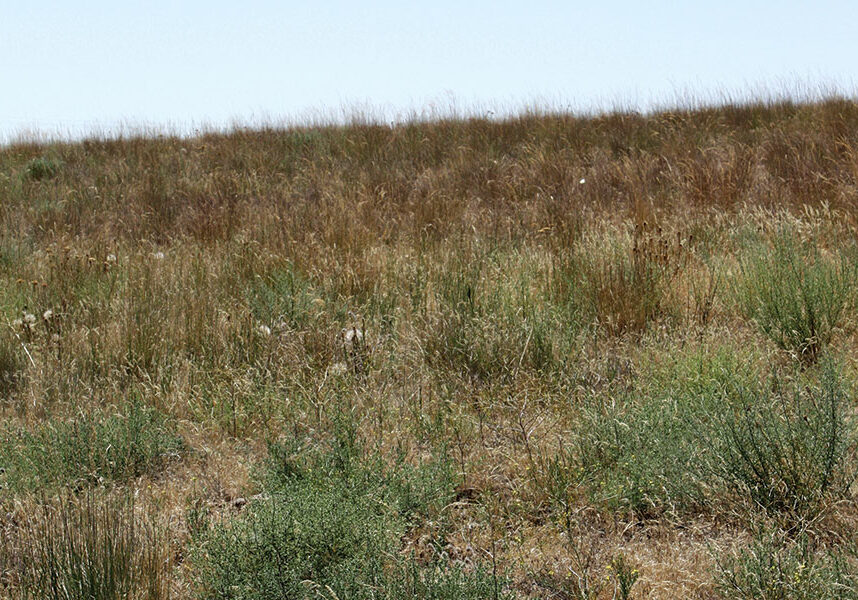
For more than 40 years, the Conservation Reserve Program (CRP) has been helping Eastern Washington growers address natural resource concerns. But lately, some growers in low rainfall zones have been feeling like their participation in CRP is more likely to break the bank than help keep the farm afloat.
The Washington Association of Wheat Growers (WAWG) has helped organize several meetings with Farm Service Agency (FSA) and Natural Resource Conservation Service (NRCS) officials to discuss growers’ concerns, including rental rates, seeding windows, and stand viability. The most recent meeting was in early March in Pasco, Wash. Patrick Bell, the new FSA state executive director, and Roylene Comes At Night, NRCS state conservationist, attended, along with members of their staff.
“It’s just really important to get growers in front of the state FSA and NRCS representatives to be able to talk about what’s happening on the ground and to give growers an opportunity to voice their concerns,” said Michelle Hennings, WAWG’s executive director, who also attended the March meeting. “In order to make CRP viable for growers in Eastern Washington and reflect actual conditions on the ground, it needs to be restructured into a regional program, not a one-size-fits-all program. Our dryland wheat farmers don’t have the same growing conditions as the Midwest does.”
According to Farm Service Agency (FSA) records, in 2024, Washington state had 920,530 acres enrolled in CRP, down more than 48,000 acres from 2023. The top three counties for CRP acreage in 2024 were Douglas County (151,251 acres), Adams County (126,177 acres), and Lincoln County (111,978 acres). In 2024, Colorado had the highest number of CRP acres with 2,779,253, followed by South Dakota at 2,390,835, and Nebraska at 2,209,191.
CRP was introduced in the 1985 Farm Bill, also called the Food Security Act of 1985, with two primary goals: reducing soil erosion on highly erodible cropland and curbing the production of surplus commodities. Secondary objectives included improving water quality, fostering wildlife habitat, and providing income support to farmers. By 1990, 33 million acres had been signed up for CRP.
In exchange for yearly rental payments and cost share assistance of up to 50%, landowners and operators agree to establish and maintain an approved perennial cover on enrolled acreage for 10 to 15 years. Enrollment is limited to 25% of the cropland within each county. Currently, Douglas County is the only county in Washington state bumping up against the county cap. In 1990, FSA adopted payment caps based on soil-specific, productivity-based rental rates and developed an environmental benefits index to rank offers. Over time, new practices have been added, and a mid-contract management provision was introduced in the early 2000s. Changes to CRP are generally made through the farm bill, including funding, program requirements, and acreage caps.
Besides helping to manage natural resources concerns, which in Eastern Washington are primarily wind erosion and wildlife habitat, other benefits of CRP include a dependable yearly payment and a contract that can be used as collateral on a bank loan.
“Another benefit of CRP is most of the time when we are working on CRP, it’s in the fall or in the spring when we’re not quite as busy on the farm dealing with our crop,” said Jeff Malone, a wheat grower in Douglas County. “However, you have to treat CRP like a crop because it is. It’s a source of income.”
Rental rates and cost share payments
Malone’s family has had land enrolled in CRP from the beginning. Like most farmers, he also manages CRP contracts for landowners. In Douglas County, CRP is used to help manage habitat for endangered species such as the sage grouse and pygmy rabbits.
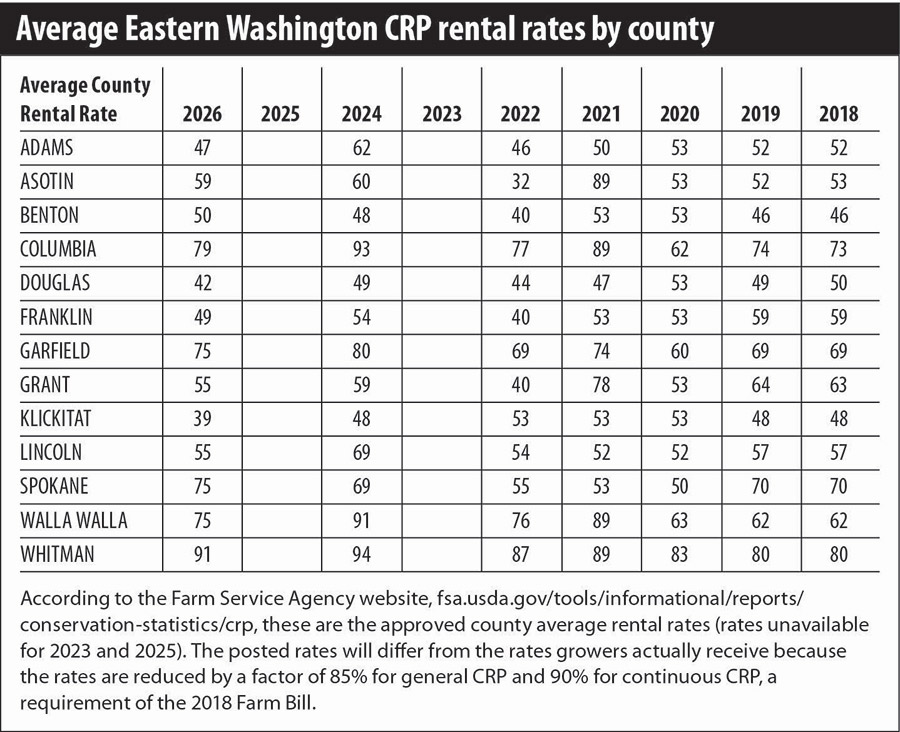
For 2026, Malone’s rental rate is projected to be $36/acre. In 2024, the average rate in his county was $49/acre. He said it is challenging to make his CRP pay when he splits the payment 50/50 with his landlords. In some cases, that payment isn’t even enough for landlords to pay their taxes.
“My problem is they just keep reducing the CRP payment. We are also getting less for our cost share when it comes to actually taking care of the ground,” he said. “It’s not a working system, especially where we’re at with wheat prices. Honestly, it used to be that in times like this, CRP was the one payment you could count on. Now that payments are getting less and less, it’s just not making ends meet. Guys have to find different avenues.”
Down in Benton County, Nicole Berg’s rental rates actually went up slightly, from $48/acre in 2024 to $50/acre in 2026. But even with that increase, her family is still struggling to make their CRP ground profitable because input costs have skyrocketed.
“Seed prices have gone up, as has fuel,” she said. “We used to start to recover CRP costs in the third or fourth year of our contract. Now we’re in the sixth or seventh year just because input costs are so high. There’s only so long you can go before something’s got to break.”
Both Berg and Malone said they are seeing cost share payments declining as well.
“The value of the seed has gone up significantly, and we’re not getting much help with cost share,” Malone said. “They used to cover at least half of our costs, but lately, it seems to be closer to a third.”
Stand density and species count
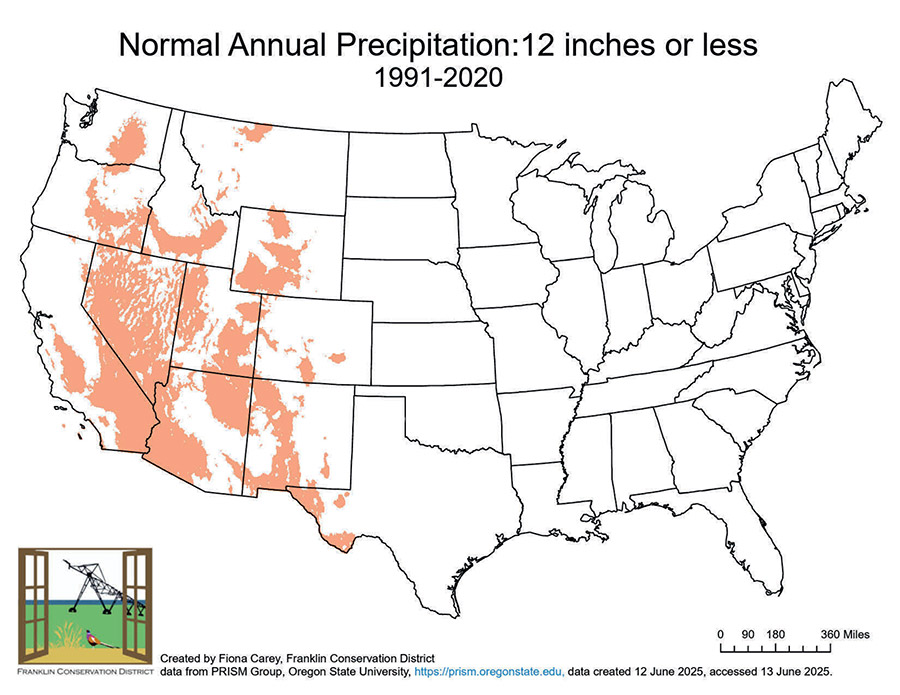
Most Eastern Washington CRP contracts have a standard requirement of .8 approved plants per square foot as measured by NRCS technicians. For areas of Eastern Washington that get 20 inches of rain, that usually isn’t a problem. However, for growers in the Horse Heaven Hills where Berg farms, they average 6 inches of rain a year.
“The problem with the standard is it’s a .8 standard for 6 inches of rainfall in the Horse Heaven Hills, and it’s a .8 standard for Whitman County and Spokane County and Lincoln County, which get 20 inches of rain. So, we’re having an issue trying to get the stand to meet that .8 standard,” Berg explained.
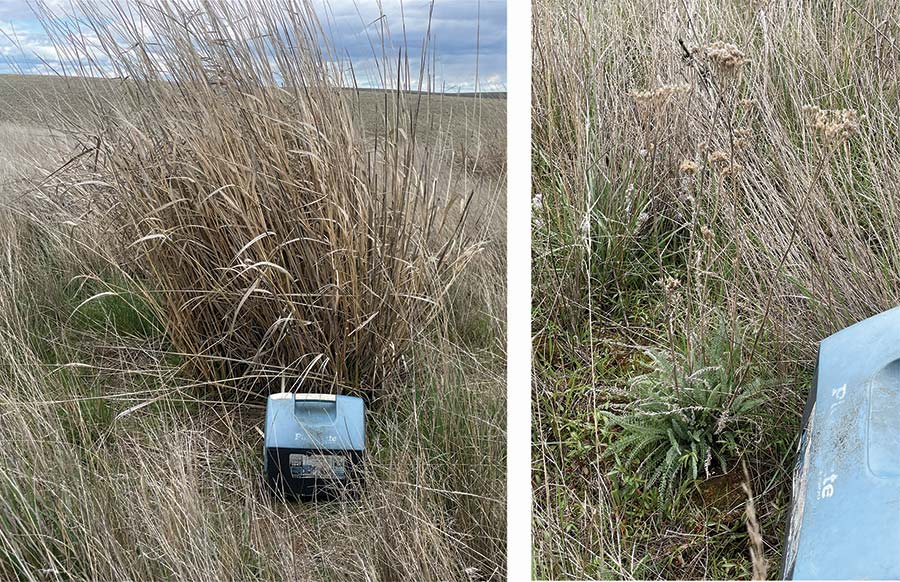
Growers who fail to meet the standard may be required to repay their contract if they can’t show a good faith effort that they tried to create the stand. Another issue Berg and her neighbors are dealing with is stand density. When a grower signs a contract, they agree to have a certain number of species in their stand, but over the life of the contract, the more prolific species tend to choke out everything else.
Malone also has had problems with species count. In his case, some of the seeds growers in his area use for their CRP State Acres for Wildlife Enhancement contracts have a lifespan less than the length of the contract.
“You get to the end of your 15-year contract, and you’ve only got six species growing where they required nine. Come to find out, the plants don’t last that long. It’s a broken system,” Malone said.
Seeding window
Chris Herron in Franklin County has been pushing FSA to give growers in the low rainfall zones of Eastern Washington an extra few months when planting CRP ground. In their contracts, growers have 24 months to prepare and plant their CRP ground, but because NRCS rules require dormant seeding, it means growers only have one shot to kill cheatgrass before they have to seed CRP.
“The timeline starts on Oct. 1. You are on the clock. Really, I can’t touch the field for seven months because it’s dry, dead sticks. To kill it, it’s got to be green, and that happens in the spring. So, October, November, December, January, February, March, April — already you’re seven months in the contract,” Herron explained. “If you match NRCS and FSA together, they want you to seed CRP on month 14. I can do that, but it’ll fail. I would prefer two spring seasons in order to kill the weeds.”
Herron said at the March meeting they were given a handout about CRP. At the bottom of the page, he noticed a second seeding window, March through May. Turns out there is a second seeding window, but only for areas with 16 inches of rain (Franklin County gets less than 12 inches of rain on average).
“You know what that means to me? If they have different interpretations, you can seed earlier or later if it rains, why can’t you make it earlier or later if it doesn’t rain?” he asked. “If they allowed me spring seeding instead of eliminating me from spring seeding because I don’t have 16 inches of rain, I could squeeze that seeding in after the second cheatgrass kill in April, and I could seed it in May. And I would beat the 24 month FSA deadline.”
For more on the 24-month seeding deadline, see wheatlife.org/crp-seeding-window-narrows/
Read FSA’s response.
Right seed, right soil
The ultimate success of a Conservation Reserve Program (CRP) contract is whether or not the grower meets their contract’s stand density and count requirements, and that all starts with planting the seed mix that’s right for local conditions.
Ultimately, the Natural Resources Conservation Service (NRCS) is responsible for telling growers what they are required to plant. Those requirements came out of soil surveys mostly done in the early 1920s and 30s, said Todd Harris, part owner of Western Reclamation, a native reclamation and forage seed company that provides CRP seed mixes.
“NRCS has been studying this for years, and so they know the precipitation zone. They know the soil type. They know the likelihood of rains, and when they come. With all that at hand, they then pick the species that are going to go into their mixes,” Harris explained. “Basically, NRCS comes up with an applicable mix that fits the precipitation zone and the soil type, and it usually has done that very, very well.”
Harris, who has sold CRP seed mixes for 20 years and, prior to that, helped produce the seed, said the seed mixes for Eastern Washington have gradually moved to include more native species. In fact, he said CRP was a driving force in stimulating the native seed industry, as was the need to replant wildfire-stricken rangelands.
The seeds that Harris sells are mainly grown in Eastern Washington under irrigation. He said if you put a native species under irrigation and manage it properly, it’s kind of like a native plant on steroids.
“It does not look the same (as a plant grown under dryland conditions). I mean, they have the same botanical characteristics, the same panicle, the same leaf structure, everything else, but you do raise a big plant in comparison when you have water,” he said, adding that growers have to be careful not to give the plants too much water; they are dryland plants, after all. “When you grow native dryland plants on irrigation, you have to manage that, and it takes years to actually understand what works and what doesn’t work.”
The cost of the seed mix is one of CRP’s main input expenses. Many growers say the seed mixes are becoming more expensive overall, but Harris said in his experience, the price has stayed quite consistent, within a $20 range, with prices in the fall of 2025 falling slightly below 2024’s prices. Market demand is the main factor impacting seed prices. In years with heavy wildfire activity or an increase in the CRP cap, seed becomes scarcer and more costly. In addition, certain seed mixes are just more expensive — the higher the number of species and different type of species in the mix, the higher cost. However, the more plant species present, the higher the environmental benefit (and, potentially, a higher CRP rental rate).
How the seeds are planted can very much impact the overall stand density and variety. For example, a grower may have a seed mix that incorporates some wheatgrass, Snake River wheatgrass, thickspike wheatgrass, and maybe a Basin wildrye, but also has Sherman big bluegrass in it. If the soil is a little bit dry and the grower seeds a little too deep, the Sherman can’t emerge from more than a half inch deep, so it would be a lesser percentage on the landscape than the grower’s wheat grasses.
“I’ve seen other growers who seed on the very surface. They get beautiful stands of Sherman, but because the larger seed didn’t have good seed to soil contact, they have lesser percentage of those larger seeded species,” Harris explained. “It’s all about seed bed preparation.”
See FSA State Executive Director Patrick Bell’s response to growers’ concerns here.