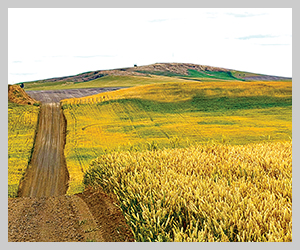






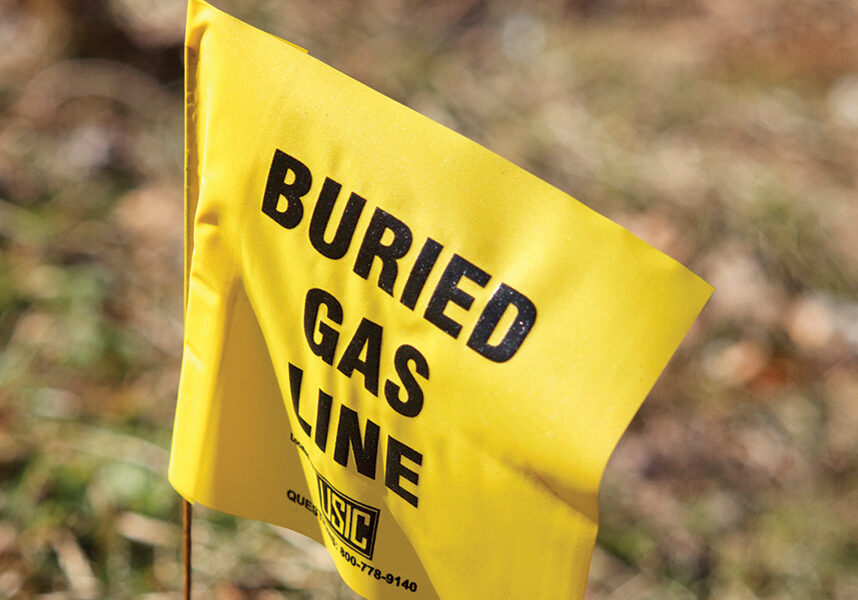
Do you know what’s buried beneath that field of wheat on the back 40? It could be nothing, or it could be a large pipe full of pressurized natural gas, and the only way to be sure is to call 811 before you do any digging.
“There’s a lot of pipeline up in Eastern Washington. The Northwest Pipeline was originally built in 1956. It was the first natural gas supply line into the Pacific Northwest and delivers the majority of the natural gas consumed in the Pacific Northwest,” said Tyson Hacking, a technical specialist III with Williams’ Pacific Division. Williams is an energy company that owns more than 32,000 miles of pipeline across the U.S., including the Northwest Pipeline. “Up in the Spokane area, we still have a lot of rural pipeline. It’s just out in the middle of the field. Most of these farmers, their parents have been farming and then they took over the farm, and the pipeline’s been in there longer than that. It doesn’t even register to them.”
Most of the pipeline was originally buried 5 to 6 feet deep, but over time, due to erosion and farming activities, that may have changed. Hacking said these pipes aren’t the small gas pipes that go into a house. They are large diameter — 30 inches in some cases — highly pressurized pipes carrying a large volume of potentially flammable natural gas. Moving natural gas via pipeline is the safest way to transport the gas.
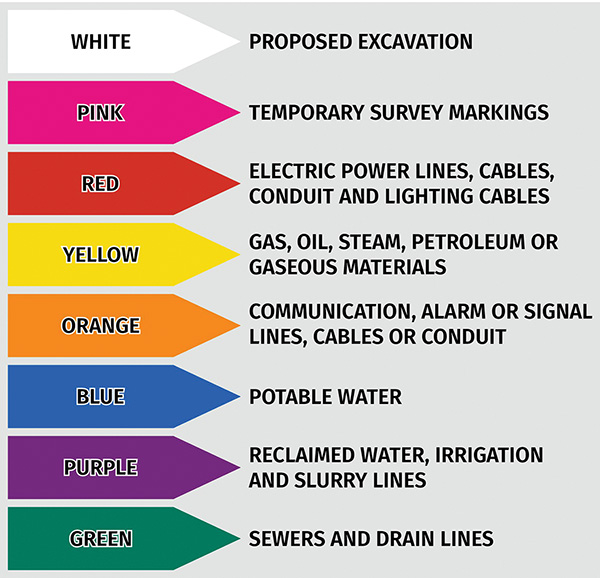
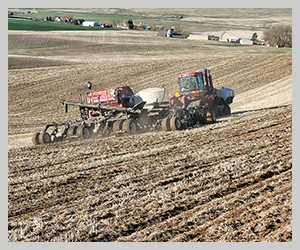
“Anytime farmers are disturbing the soil other than planting, such as tilling, deep ripping, drain tiling, etc., we want to make sure that they’re doing a one call (or calling 811),” he said. “We have really good relationships with a lot of the farmers up there in the Pacific Northwest because we’ve worked together for years. We just want everyone to be safe and to be able to go home at night. We want to work together and keep our pipe safe.”
Washington residents can call 811 or visit
811beforeyoudig.com/811-states/state-washington/ to submit a request for an underground utility locate. The service is paid for by gas and other utility companies and is free to the public. Once the request is made and the dig location identified, the one call center will notify anybody who has utilities in that area. Those companies will send out representatives to mark the location of any buried infrastructure.
“We have to analyze and determine whether that one call is encroaching on us or not. If it is, we’ll go out and we’ll mark it,” Hacking said, adding that if the digging is going to be within their right of way, a Williams representative is required to be onsite when it happens.
Most buried pipelines are required to have signage along the route. Hacking said you are supposed to be able to stand at one sign and see at least two more signs, one in front and behind, but sometimes, farmers will remove signs that are in the middle of a field. If it keeps the line of sight, Williams may move a sign to the edge of the field.
Most states have an exemption to the one call, but there’s usually an exception to that exemption — when the excavating happens on a known utility right of way. In Washington, farmers are exempt from calling 811 if the tilling of soil for agricultural purposes is less than 12 inches in depth within a utility easement and 20 inches in depth outside of a utility easement.

“Most of the time, the farmer will read that first part and they’ll be like, ‘oh, I have an exemption.’ They don’t read the second part,” Hacking explained “Even though the state might exempt you from calling, it doesn’t exempt you from the liability if you were to hit a pipeline. Anytime you’re disturbing the ground, you should do the one call.”
If a person damages a pipeline, the liability could be enormous. In a typical case, Williams will generally send the person responsible for the damage the repair bill. But that person could also be on the hook for damages outside the actual repair, such as lost revenue from businesses affected by any outage and the cost to restore power to a utility’s customers.
In 2023, a farmer outside Pullman was installing a drain tile in a leased field when they hit one of Williams’ pipelines and ruptured it. Fortunately, no one was injured, and Williams was able to repair the pipe in 24 hours at a cost of over $100,000. However, the incident caused 37,000 Avista customers to lose service for nearly a week. Hacking said damages, including lost business and wages, were estimated to be close to $10 million.
“There was no one call made. Had (the farmer) called one call, he would have known where we were,” Hacking said. “We want to work with farmers. We want to be good neighbors, so please work with us and please call 811.”