





Homes for wildlife US Fish and Service program offers financial aid for habitat establishment
Natural Resources
By Trista Crossley
Editor
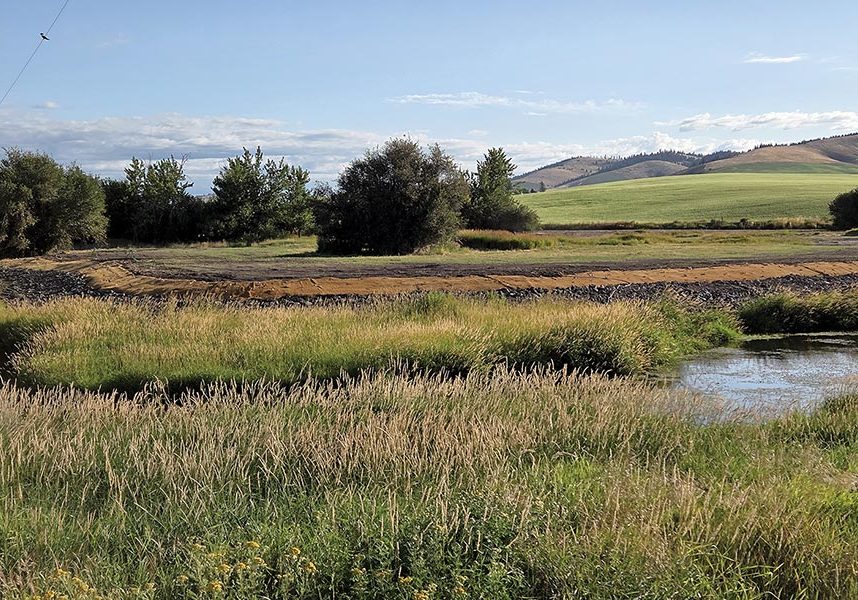
Eastern Washington producers looking to bump up wildlife habitat on their farm might be able to find financial help from a little-known U.S. Fish and Wildlife Service program.
The Partners for Fish and Wildlife (PFW) program was established by Congress in 1987 and is accessible in all 50 states. With nearly 70% of all land in the U.S. privately owned, the PFW recognizes the importance of working collaboratively with landowners and that such relationships are critical for ensuring the health and sustainability of America’s fish, wildlife, and plant species. The program offers free technical and financial assistance to landowners, land managers, Tribes, corporations, schools, and nonprofits who are interested in improving wildlife habitat on the land they own or manage. Projects focus on benefiting federal trust species including migratory birds and endangered, threatened, and at-risk species. The program has been servicing Washington landowners since the early 2000s and has completed 15,000 acres of wetland and 25,000 acres of upland habitat enhancement.
“One of our major goals is to keep species off the endangered species list to alleviate regulatory burden on landowners. We understand the value of keeping working lands working, and that in many cases, loss of farming and ranching in our communities often leads to loss of species,” said Nicholas George, state coordinator for the PFW program. “The program is voluntary by nature, which is something that I really want to emphasize. We focus on identifying shared goals and developing projects that are mutually beneficial to not just the wildlife and plants, but also the private landowners we serve.
Although the PFW program is designed to work closely with U.S. Department of Agriculture (USDA) programs, like the Conservation Reserve Program or the State Acres for Wildlife Enhancement (SAFE) Initiative, there are some big differences. For example, there are no adjusted gross income requirements or rental rates. There are no practice standards the program has to adhere to. Once approved for a project, producers sign a 10-year habitat retention contract. As George explained, each project is unique to the operation, the landscape, and the objectives and tends to focus on establishment rather than maintenance.
It’s a little hard to pin down what the program can do because it has the ability to do a wide range of things. Some of the projects that have been funded by PFW include water efficiency projects, fuels reduction projects, stream or creek restoration, fencing, and seeding. In Douglas and Grant counties, projects might focus on sage-grouse or pygmy rabbit habitat. In Spokane or Whitman County, it might be Spalding’s catchfly, which is an endangered plant. Other potential projects might cover habitat creation in remnant prairie “eyebrows” in the Palouse or in seeps that can provide late season water sources for wildlife. In irrigated farmland, the odd corners or outer edges of pivots could be utilized as wildlife habitat and help with connecting wildlife across a landscape.
“We’re pretty flexible. If something is needed and we can show the need for the wildlife and the producer, that’s something that we can discuss. Our goal in the program is not to take productive ground,” George said. “It’s worth a conversation to see what opportunities are there.”
For producers who worry that creating habitat for a rare or endangered species may cause future headaches, George was quick to add that if a “rare critter” does show up, nothing beyond maintaining the habitat for the life of the contract will be expected.
“I think it’s a good thing, that we should all be proud of, how ag and rare species can come together and coexist,” he said. “Maybe the only reason that the habitat is still there is because of the agriculture, because as we’re seeing, a lot of areas that aren’t farmed anymore are not habitat anymore.”
One thing to note is that the PFW program can’t pay for practices that are already paid for by another USDA program. But as George pointed out, it can provide financial assistance to go above and beyond the requirements outlined in the producer’s USDA contract. There could also be opportunities to help with a producer’s midcontract management requirements.
There are no application deadlines for the PFW program. It runs on the government’s fiscal year, so funding may not always be available. Producers who are interested in exploring PFW opportunities should contact George at (360) 522-0545 or email him at nicholas_george@fws.gov.
“Contact me, and we can start that conversation. I can then get producers in touch with the local biologist who services that area,” he said. “We like to have those conversations early and then try to assist producers with finding the potential funding for their prospective projects, whether it be our own or through another partner or source.”