





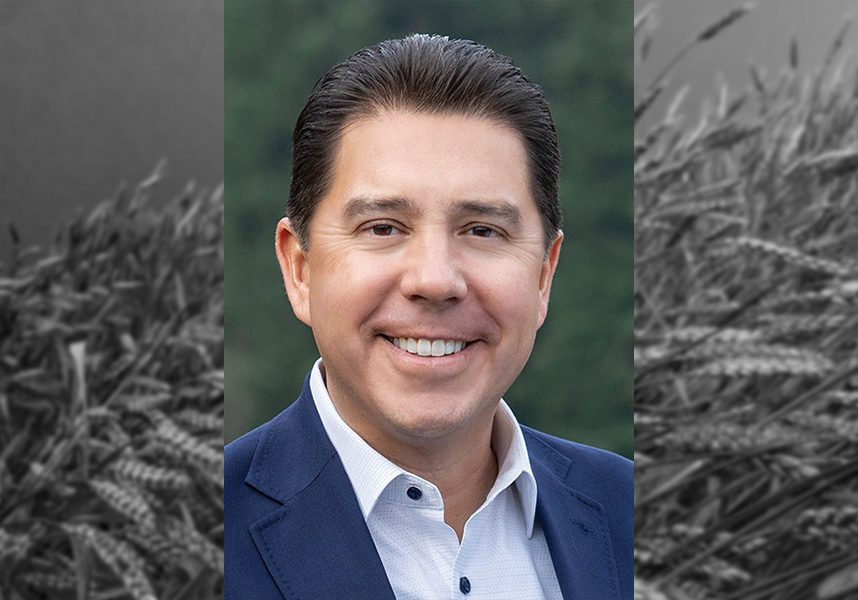
Casey Sixkiller was appointed as the 14th director of the Washington State Department of Ecology in early December 2024 by then Governor-elect Bob Ferguson. As director, Sixkiller oversees a biennial budget of $2.8 billion and a workforce of 2,200 employees dedicated to protecting Washington’s air, land, and water. Prior to joining the department, he served as regional administrator for the U.S. Environmental Protection Agency’s Region 10, which encompasses Washington, Oregon, Idaho, Alaska, and 271 Tribal nations. Wheat Life reached out to Director Sixkiller to ask about his priorities, Ecology actions on Hangman and Spring Flat creeks, and how to foster a better relationship between the department and growers.
What are your priorities for Ecology for the rest of this year?
At the Washington State Department of Ecology, we’re committed to being responsive, accessible, efficient, and customer-focused, and I think one of the best ways to do that is to meet people in their communities. That’s why I’ve made it a priority to meet with folks on the ground to learn how we can improve and partner to find success and common ground. This summer, I’ve spent a lot of time talking to people in Eastern Washington about our changing water supply, and those are conversations we need to continue.
What are your long-term goals for the department?
My vision — and Gov. Bob Ferguson’s vision — is really focused on delivering high quality customer service and practical solutions. I know that if the primary way you interact with Ecology is through our regulatory role, “customer service” may sound like a strange term. I would argue, however, that regulations are where customer service is most important.
If you’re waiting on a permitting decision, we owe you clarity about our timelines and requirements. If we’ve flagged a compliance issue at your farm or business, we should be explaining what we saw, what it means, and what options you have to address that issue. But customer service needs to mean more than simply being responsive. We need to listen to feedback and input. We need to be a partner and work together to tackle the big challenges we have as a state.
Ecology’s mission is to protect, restore, and maintain the places and people that make our state so special and to protect public health. Education, outreach, guidance, partnership, trust — those are the ingredients we need to successfully implement our state’s environmental laws and regulations.
What have been some of the highlights leading the Department of Ecology?
As I was saying, by far the biggest highlight — and priority — for me has been getting out into communities, meeting with people across Washington. I’ve met with producers in Spring Flat Creek and sat down with folks at a pizza place in Chewelah. At the end of June, I was out in Spokane meeting with leaders from local governments, from farming communities and irrigation districts, to talk about how we can work together to secure the water we need for the long term.
Water is life. It’s irreplaceable. This year, we declared a statewide drought because we could see how challenging water supplies were going to be this summer. It’s the fourth year in a row for drought for parts or all of our state, so we know we need new ideas to deal with these long-term challenges.
One thing you should know about me is that my path to this job has been a little different than most of my predecessors. I’m not a lawyer, and I’m not a scientist, but I have worked at every level of government and built a career around bringing people together to solve complex problems. That’s the approach I’ve tried to bring to this job from day one.
Over the past 18 months, I’ve spent a lot of time listening, meeting with industry groups and representatives, local and state leaders, and businesses. That’s the approach we’re following as we work on these water supply issues. Being able to sit down with people face-to-face and have those conversations and hear people’s ideas and their concerns is the best way to get those ideas on the table.
How do you respond to growers who say Ecology’s push for buffers could jeopardize farmers’ ability to make a living?
Profitable agricultural lands and clean water can go hand in hand. We want to provide practical support that helps ensure both a strong agricultural economy and healthy waterways. This is why we’ve worked to incorporate feedback from the farmers we work with and to coordinate our efforts with conservation districts and other partners.
Through our partnerships with local conservation districts, we offer funding and technical assistance that can help landowners reduce pollution in ways that make sense on their farms.
One of the complaints about Spring Flat Creek in Whitman County is that Ecology is treating ephemeral and intermittent streams on the same level as perennial streams. How do you respond to that?
We recognize that a one-size-fits-all approach often doesn’t work for every basin, which is why our regionally based staff use their knowledge of local streams so we can adapt our approach. Ephemeral, intermittent, and perennial streams each function differently and are treated differently. Our guidance provides different buffers or setback recommendations based on channel size and flow.
The Spring Flat Creek watershed has ephemeral sections. It has short intermittent, long intermittent, and perennial stream sections. Temperature issues are a concern on the long intermittent and perennial sections of the creek. Our staff will work with producers in Spring Flat Creek on site-specific plans that take into account the differences relevant to their site. We also take into consideration the field-specific upland practices. If tillage conservation practices are being used, like direct seed or no-till, then we can recommend a smaller setback from the streambank.
Ecology has also invested $700,000 of state funds to farmers in Spring Flat Creek to offset the costs of riparian buffers. Under that program, farmers can receive between $300-$350 per acre with 15-year contracts, and all planting and maintenance activities are also covered by the program.
As I said, I met with producers on Spring Flat Creek last summer to hear their experiences and understand the best way to stay engaged with them. Our team is adjusting to make better, more productive connections with farms in that area.
On Hangman Creek in Spokane County, growers are frustrated and say Ecology keeps changing the goalposts, and they aren’t getting credit for the work they are doing. How do you respond to that?
I want growers to know that we recognize the work many of them have already done in Hangman Creek. Their efforts matter, and water quality has been improving.
It’s really encouraging to see projects like direct seeding start to take off. We’ve been working with the Spokane Conservation District to set up tests of direct seeding so that farmers can try before they commit — seeing whether that approach works for them. We can provide up to $30 per acre for as many as 250 acres per producer for up to three years.
In total, Ecology has provided nearly $15 million since 2018 in taxpayer funding to farmers in the Hangman Creek watershed. That’s not just projects like direct seeding. A significant portion of that funding has supported farmers through rental payments for implementing riparian buffers. At the same time, we need to acknowledge that Hangman Creek continues to have water quality challenges, with the majority of waterways still lacking buffers from agricultural production. We continue to work with the conservation district and local farmers to address these areas.
Our goal is to put together a combination of good conservation practices and minimum width buffers to protect stream banks, capture polluted runoff, and keep soil on farms. You need both conservation tillage practices and stream buffers to protect water quality.
Ecology recently released its nonpoint plan and clean water guidance for agriculture. Although the plan is labeled “voluntary,” growers are concerned it points towards a future where these voluntary practices become mandatory. How do you respond to that?
The Clean Water Guidance for Agriculture was designed to support locally led approaches that help keep water clean. The guidance gives landowners flexibility, from livestock grazing management to tillage practices that reduce erosion. Producers can decide how they meet those goals.
Ecology does not have the option of doing nothing. Ecology is legally required to manage nonpoint pollution to meet state and federal clean water requirements. But we do have flexibility in how we improve water quality. We can make adjustments based on specific conditions and the practices an individual landowner uses.
The guidance itself doesn’t change the law. It simply outlines what effective, science‑based practices look like so everyone in the watershed can do their part to protect water quality and aquatic habitat.
The relationship between Ecology and growers can be a little tense, as both sides are under pressure — Ecology to fulfill its mission to protect the environment, and growers to farm their land and make a living. From your perspective, how can that relationship be improved?
It takes all of us coming to the table and working together on solutions. I keep saying it because I truly believe it.
Over the past 25 years, I’ve worked in communities all across our state, from Yakima to Seattle, and in Washington, D.C., too. And time and time and time again, I’ve seen that we can get to better solutions by working together. A collaborative approach is always going to yield the best results, and I am committed to continuing these conversations.
You were asking about the questions we’ve heard in the Hangman Creek watershed. I recognize those questions are out there, but we have also found answers. Our Hangman Riparian Restoration and Conservation Program was developed through dozens of conversations with Hangman producers on what they would need to see in a riparian buffer program. The Spring Flat Creek program we were discussing was modeled on what we did in Hangman Creek. In both areas, we’re providing $300-$350/acre rental payments over 15-year contracts for riparian buffers.
So far in Hangman Creek, we’ve enrolled more than 300 acres into the program, protecting more than 19 miles on Hangman Creek and seven miles along its tributaries. That matters. We listened, and we worked together on a solution, and that’s paying off.