






Soilborne Wheat Mosaic Virus (SBWMV), a disease previously only found in Walla Walla County, has now been identified in multiple locations in Whitman County.
Morgan Menaker, the Washington State University (WSU) Regional Extension agronomist for Whitman, Asotin, Columbia, Garfield, and Walla Walla counties, notified growers of the bad news at the Agricultural Marketing and Management Organization’s 2026 Wheat College in early June.
“Unfortunately, this disease was identified in Whitman County this past spring. This is one of those that we absolutely have to raise the alarm bell on,” he told growers.
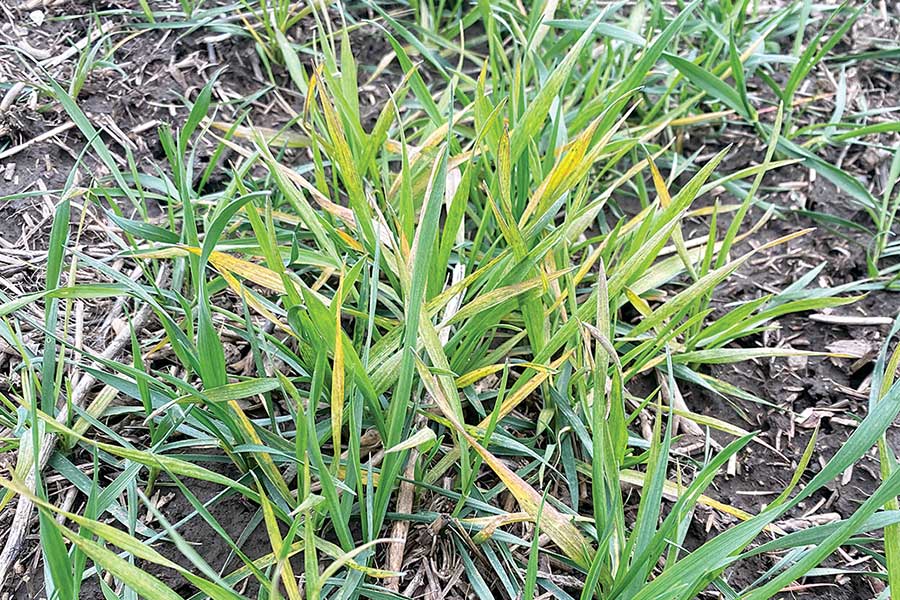
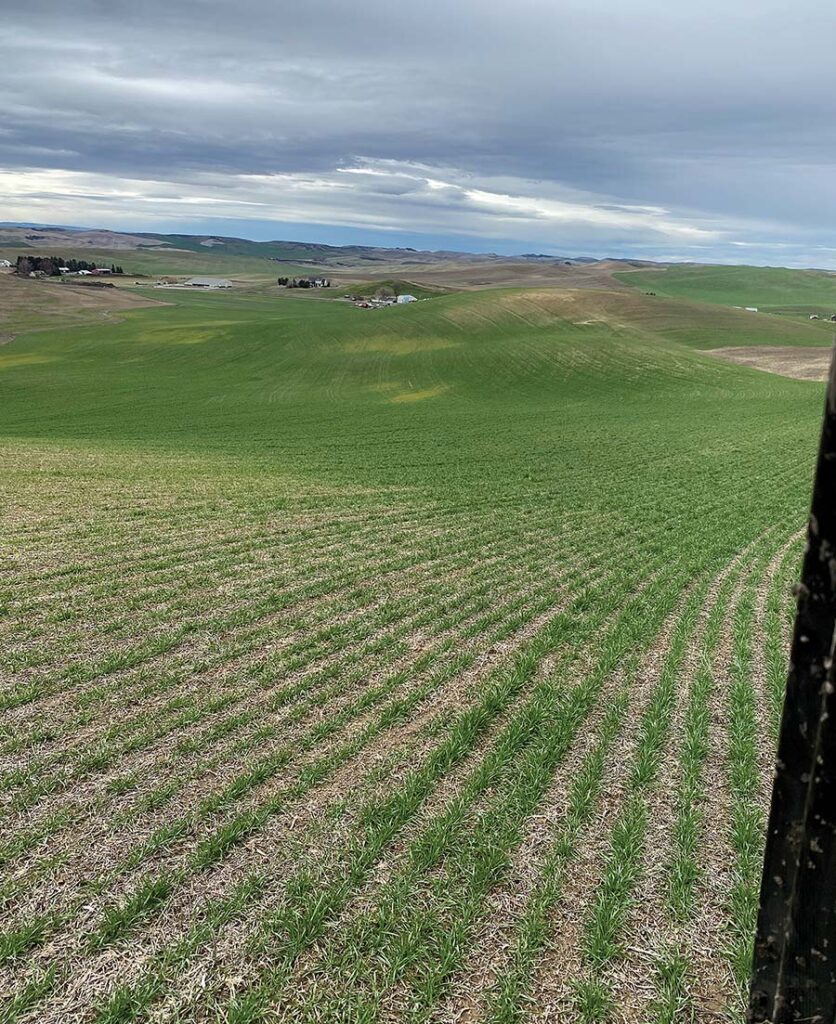
In March, a grower asked Menaker to take a look at some “weird yellow wheat.” Unable to identify the problem, Menaker took samples back to Washington State University (WSU) where the virus was identified. Further investigation confirmed that the virus was present in 11 noncontiguous fields south of Pullman and east of Almota.
SBWMV is vectored by a parasitic, fungus-like protist, Polymyxa graminis, that infects the roots via motile swimming spores. Winter wheat is most suspectable, but spring wheat can be affected. The protist forms resting spores that can survive in the soil for many years. It requires free moisture to infect, and that is why symptoms are usually found in plants in low-lying areas with wet soil. Once the virus is present in the soil, the only treatment is to plant resistant varieties.
“That is the only way that we’re going to be managing this into the future. Once a farm has this, they are pretty much stuck with it forever. There’s no fumigation that is economic to do,” Menaker said. “Rotation is not a viable option to control this disease, unfortunately.”
The virus was first discovered in the central Plains in 1919. In 1995, it was identified in the Willamette Valley in Oregon. Shortly after that, it was found in the Milton-Freewater area and, by 2008, in the Walla Walla Valley. In 2023, it had made its way to Nez Perce and Idaho counties in Idaho.
How SBWMV made the jump into Whitman County is unknown, but it is generally spread via cultivation, wind, and/or water. Anything that carries infested soil can spread the disease. So far, researchers haven’t been able to find a common link between infested fields.
Why is the disease showing up now? Menaker pointed to the warm, wet winter as a likely suspect. In most of Eastern Washington, the ground never really froze. Data from the WSU Small Grains website, shows that the Pullman area is almost a month ahead of last year in growing degree days.
Identifying SBWMV
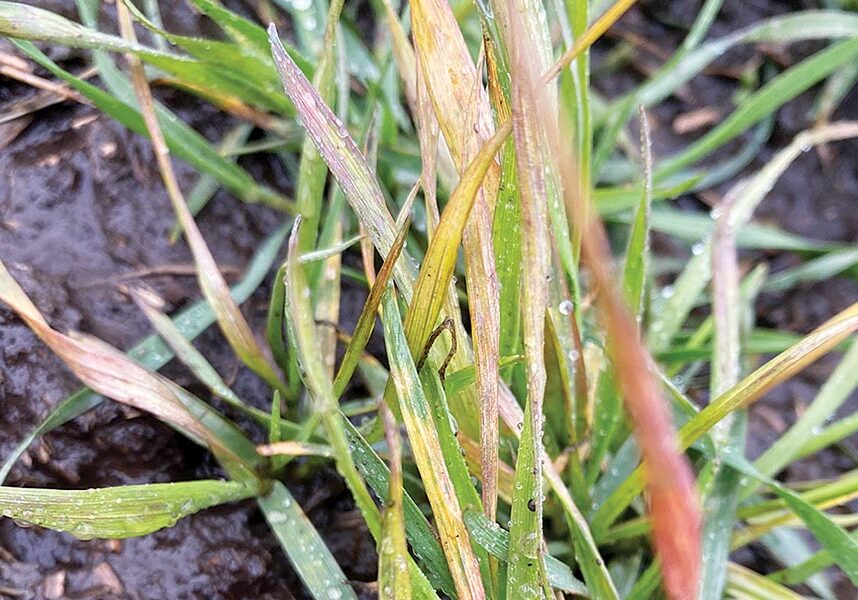
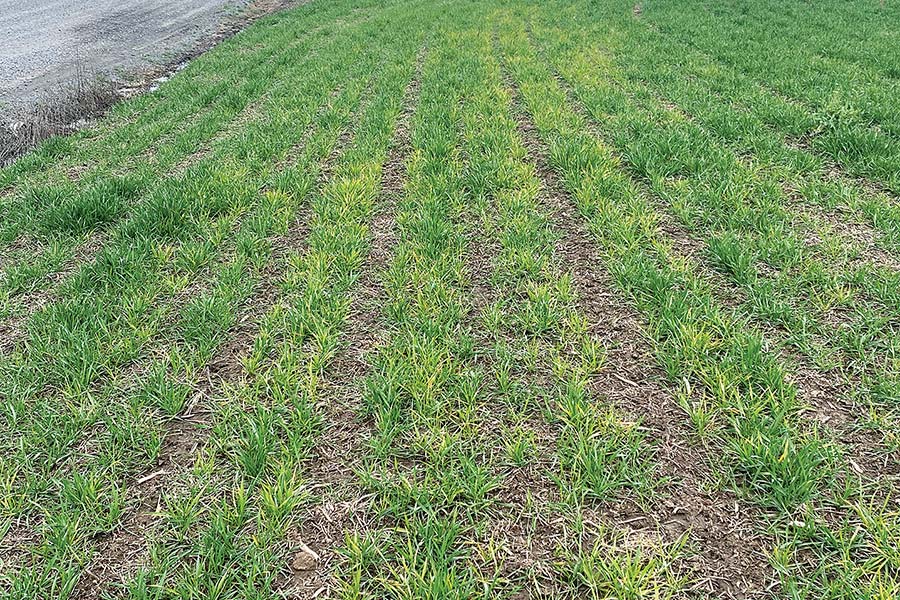
Menaker said it is very difficult to identify SBWMV by eye as its symptoms can mimic other problems, such as nitrogen deficiency, water logging, and early season stripe rust. The only way to be sure is with an ELISA or DNA test. Besides yellowing, plants will have missing tillers, and leaves will display a yellow/purplish mottling and mosaic. A mosaic is irregular patches of alternating light green, dark green, yellow, or white on the leaf. Infected plants will generally be located in wet locations. There is a very narrow window to collect tissue samples, usually in the spring when the wheat begins to green up. As the weather warms, disease development slows and stops. Growers should be on high alert when scouting for weeds or making herbicide passes.
“When stuff looks off, put boots on the ground and find out what’s going on,” Menaker said.
Yield impacts
Infected wheat will generally grow out of the disease, but plants tend to remain stunted with reduced tillering. Yield reductions of 40% in susceptible varieties are common, with a 37% reduction in biomass, and a 34% reduction in heads per meter squared. One bright spot is there is no significant reduction in test weight or quality.
Managing SBWMV
As previously mentioned, once a field is infected, there is no cure, only management. Menaker’s suggestions included:
- Plant early, get wheat to germinate but not get waterlogged. “Soil wetness post planting has a much greater importance than seeding dates.”
- Plant known affected fields last. “It’s really important that you track what fields and what farms have this problem. I recommend that is the last thing you plant. It might not be the easiest thing to do, but I would hate for you to run through that patch and then jump into your next farm and then jump down to some leased land and then back to your own land and then have an absolute mess, right?”
- Choose resistant varieties. This is the only way to manage it.
- Be leery of custom planting, spraying, and harvesting. “I like that we have the option (of custom work), but you need to know where they were last, and they need to know if they were in infected soil or not.”
Resistant varieties
Because the Midwest has been dealing with SBWMV for over a century, genetic resistance is already in most of their varieties and there are known resistance genes. Testing has shown that some Pacific Northwest-adapted varieties, mostly hard red winter wheats, are already resistant. WSU wheat breeders are using genetic markers to determine which soft white wheat varieties in the variety testing program might already have some form of resistance.
In other positive news, the effort to identify the SBWMV problem got a major boost when WSU researchers were approved for a U.S. Department of Agriculture grant to support additional research.
Going forward
Menaker told growers that fall 2026 will be their first opportunity to act by considering planting varieties that have been identified as having some resistance. He is hopeful that will slow the spread of the disease. He will also be tracking yield losses and any quality impacts from the fields that were identified this year.
“If you see something crazy, some weird wheat, please call me,” he said.
More information about SBWMV and variety resistance is available at smallgrains.wsu.edu.