



Returning to her family’s Whitman County farm may not have been in the cards for Carrie Bellecourt, but she’s found a way to honor her background by sharing her wheat-growing knowledge with her first-grade classes.
Bellecourt grew up in Steptoe, Wash., the daughter of Jim and Cathy White. Jim was the fourth generation to farm his family’s land; he is now retired and the corporation leases out the farm. For the past 17 years, Bellecourt has taught grade school at the Riverview School District in the Snoqualmie Valley, between North Bend and Redmond. Last year, her science curriculum included growing alfalfa, ryegrass, and wheat from seed. With her background and ties to growers in Eastern Washington, she said she was all over it.
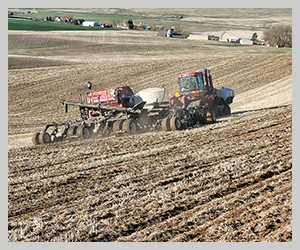
“One helpful resource is the Monson family. I grew up with Kent, and his family provided great aerial videos of the process of growing wheat, everything from tilling to seeding to spraying to harvesting,” she said. “That has been a really great resource to be able to show my students how the wheat goes in the ground, and how it’s maintained. I also have lots of books about wheat and bread, so I’ve been able to read them stories about how Washington wheat is harvested, is transported down the river, and then becomes some of the food they eat.”
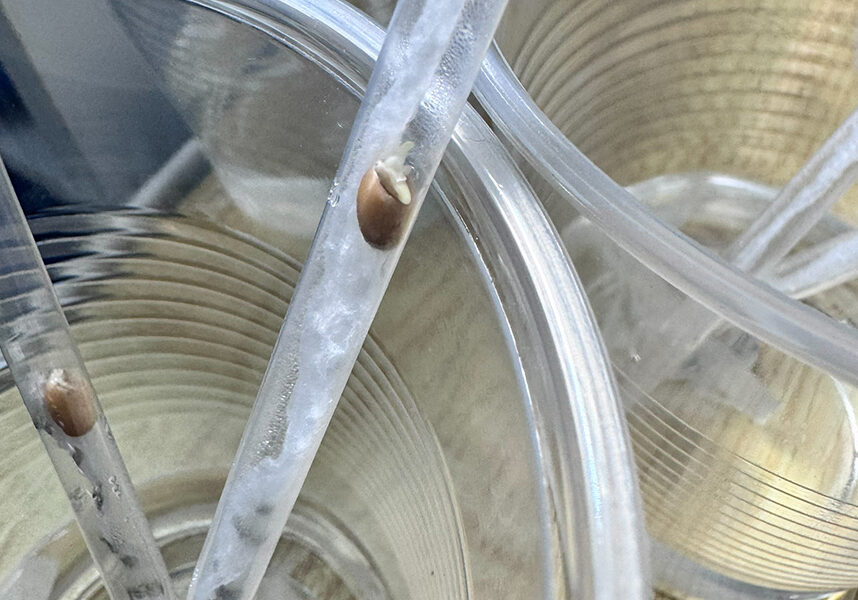
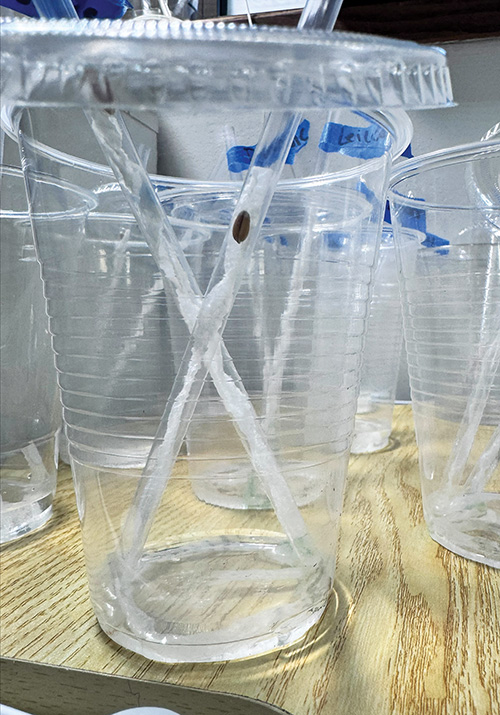
The students germinate wheat berries in clear straws so they can watch the roots and seedlings develop. They will take most of their wheat plants home, but some seedlings are transplanted into the school’s garden. If Mother Nature cooperates, they’ll be able watch the plants grow and develop heads. Bellecourt has a bucket of wheat kernels from her father’s last harvest that the kids can play with, to learn what wheat kernels look and feel like. This year, she plans to mill some wheat berries to demonstrate how they turn into flour.
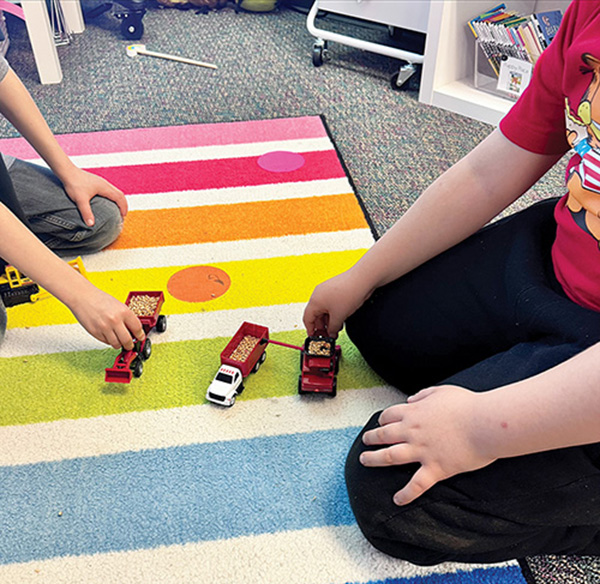
“I really love this part of our science unit. It’s near and dear to my heart because I grew up around farming, so if I can bring some of that to my students, it feels good,” she said, adding that she’s bought toy combines, bank-out wagons, and tractors so the students understand the different equipment Eastern Washington farmers use.
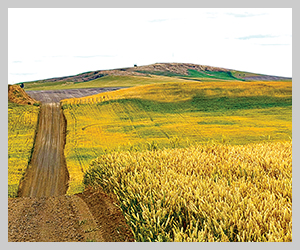
The area Bellecourt teaches in is “rural moving into suburban,” and has some agriculture, especially dairy, but nothing like the sweeping fields of Eastern Washington. The school garden is used to measure rainfall as part of the class’s weather unit. As for the alfalfa and ryegrass that the children also plant, Bellecourt said the plants are “mowed” with scissors, and the children learn how ryegrass is grown in lawns, and alfalfa is used as food for livestock. For first graders, the objective of the science unit is to look at the systems of a plant and discuss how the food can be grown for nourishment. They also talk about how parts of one crop can be used to plant next year’s crop.
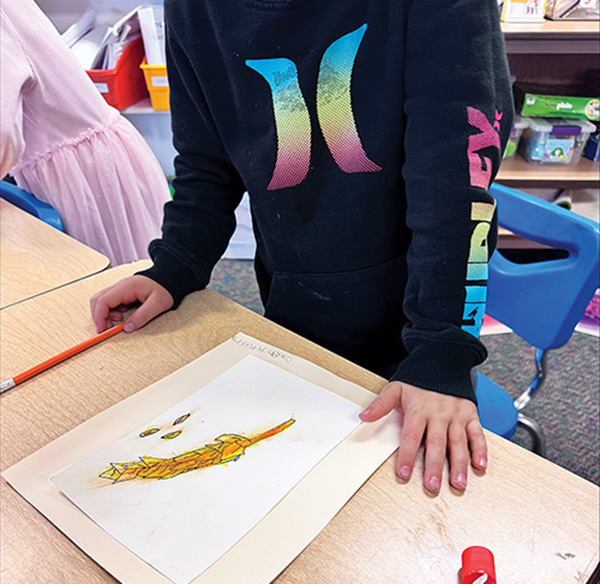
“The students are actually grabbing the soil, putting their seeds in themselves, watching them grow. I can’t keep them away from the science corner,” Bellecourt said. “They are always watching their plants and observing them. I caught a kid today talking to her plant because she is very smart and knew that carbon dioxide fed the plant, so she really wanted to talk to it. Six- and seven-year-olds really enjoy the hands-on concepts of science. It brings me back to my childhood of doing hands-on learning to hit the standard instead of just reading out of a book.”
Bellecourt said some kids know what wheat looks like, but many don’t realize where their food comes from. Local farms and FFA clubs will sometimes bring locally grown food to the lunchroom, and she feels it’s important to highlight Washington apples, potatoes, and wheat, among other crops grown in the state.
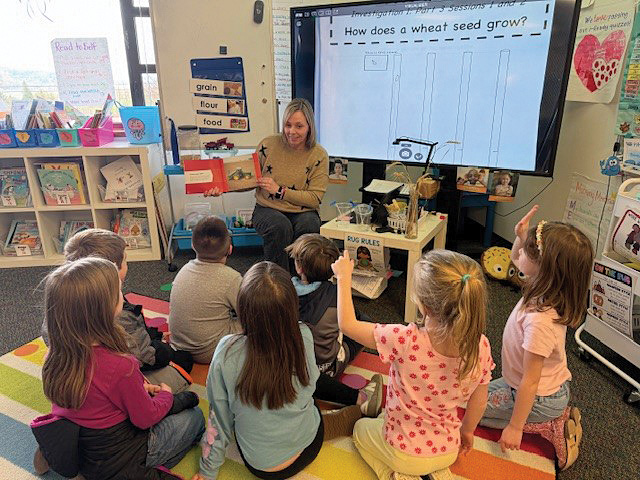
“Knowing where all of our fruits and vegetables and meat and grains came from is an important part of how I grew up, and if I can pass a little knowledge of that to students, I think it sets them up for success in science and their life,” she said. “I always kind of pushed away being a farmer’s granddaughter, daughter, and having five generations of my family do this. But then all of a sudden, I’ve embraced it when I know that I can teach kids about it. That’s been a big change for me, a personal change that kids everywhere should have this knowledge. And boy, do they like combines and tractors. They all want to ride in one. I can’t get a combine over here. We might just have to take an overnight field trip to Eastern Washington!”